In the first part of a two-part series, the team from Aero Historian trace the story of a lucky RNZAF Curtiss Kittyhawk named Gloria Lyons, and why it survives to this day thanks to some aviation conservation pioneers.

The story of Gloria Lyons began in 1943, when four young New Zealand airmen of 4 Servicing Unit (4 SU) attached to a New Zealand fighter wing sat in their tent one evening, reading mail that had come that day.
For one there were seven or eight letters; another also received a good batch; but for the other two there was nothing. So they got their heads together and not long afterwards this advertisement appeared in a Christchurch newspaper:
“Two lonely airmen wish to correspond with two smart young ladies 18-21 with a view to friendship, interests, dancing, music and sport. Photo if possible.”
Among the replies came one from Gloria Lyons, a patient in Christchurch hospital with tuberculosis of the spine. She replied to the airmen on behalf of herself and a fellow patient.
A few more letters broke the ice and a regular correspondence flowed. She told Maurice Moody, an armourer in 16 Fighter Squadron on Ondonga, a remote territory in the Pacific, of what went on at home in New Zealand, and he described to her what life was like in the tropics.
Gloria told Maurice Moody, an armourer in 16 Fighter Squadron on Ondonga, a remote territory in the Pacific, of what went on at home in New Zealand, and he described to her what life was like in the tropics.
It is amazing how things got round in these camps – the story caught their imagination; and when a Warhawk with the identification letter “G”was passing through the maintenance line the idea blossomed in someone’s head to name the fighter after the sporting, bed-ridden girl and adopting her as the unit’s mascot.
Then came some publicity – a Press Association story about the aircraft named after the girl:
ROMANTIC STORY OF PACIFIC AIRMEN – AN AIRCRAFT AND A GIRL
The Telegraph – Press Assn – RNZAF Official News Service, New Georgia:
Nineteen-year-old Gloria Lyons lies in Christchurch Public Hospital with tuberculosis of the spine. Patient and cheerful, she faces a stay there of two years. At a forward Pacific base of the RNZAF stands another “Gloria Lyons” – a slick Warhawk fighter and in the pilot’s cockpit a small type-written note is pasted, “To the pilot. Gloria Lyons is our No. 4 SU mascot. She is doing a long term in hospital and we want both our Glorias to last a long time. No. 4 SU, December 43.”
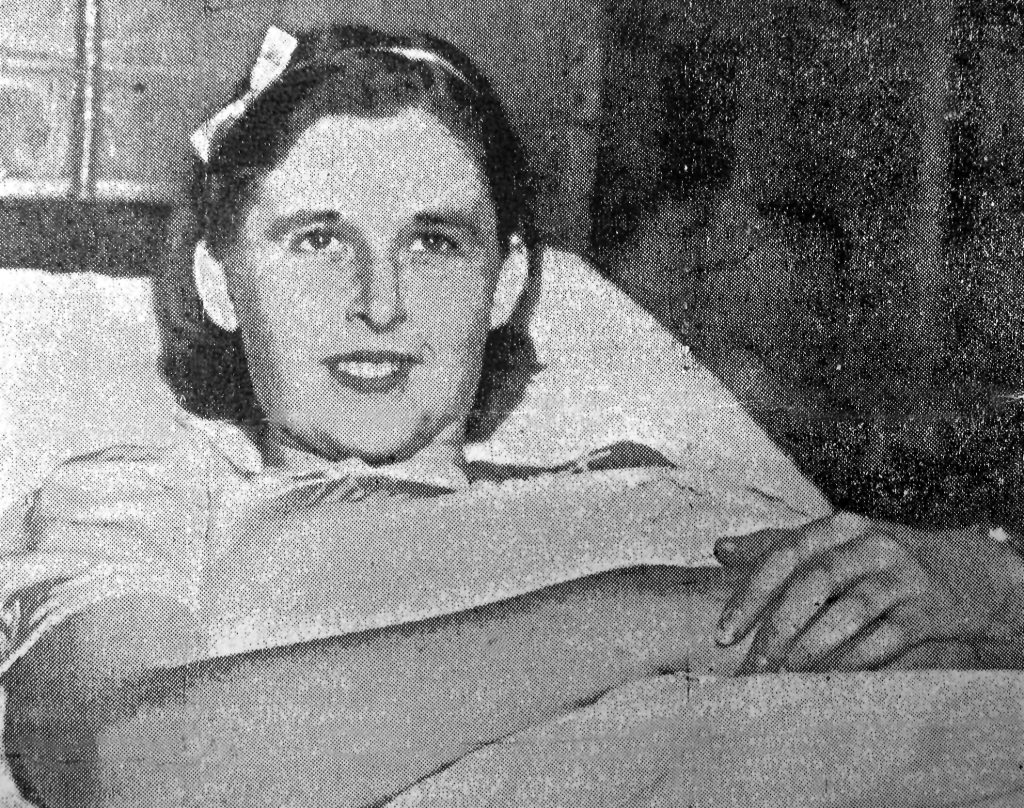
Moody tried to find Gloria some years after the war, but she had disappeared, last seen in 1954 as a patient in Christchurch Public Hospital. It was thought she might have died from her illness, but the tale had a happy ending. Gloria, now Mrs Austin-Eames, was discovered alive and well living in Bankstown, Australia. It isn’t recorded if Moody ever met her thereafter. Gloria passed away in 1998.
Operations, public duty and salvation
The RNZAF operated 297 P-40s, comprising P-40Es, P-40Ks, P-40Ms and P-40Ns, plus for a short time one Packard Merlin-engined P-40L which was mistakenly sent to New Zealand. The aircraft were designated Kittyhawks, but later models subsequent to the P-40K were given the American designation Warhawk. The fighters equipped six squadrons: 14, 15, 16, 17, 18 and 19F (Fighter) Squadrons, plus 2 and 4 Operational Training Units (OTU).
RNZAF P-40s saw combat in the Solomon Islands, particularly in the defence of Guadalcanal, and also escorted RNZAF, USAAF, USN and USMC heavy, medium and dive bombers to targets as far away as Rabaul. The US aircrew were particularly impressed with the RNZAF pilots’ discipline in sticking close to their charges despite the temptation to break away and join the top cover Allied fighters engaged in dogfights.
From March 1944 they switched to fighter bombing and strafing sorties over Rabaul, given the lack of Japanese aerial opposition. RNZAF P-40 pilots claimed 99 Japanese aircraft along with another 14 probables, against 20 combat losses of their own. The vast majority of P-40 losses were accident-related, with 152 lost in the Pacific Theatre and New Zealand combined.
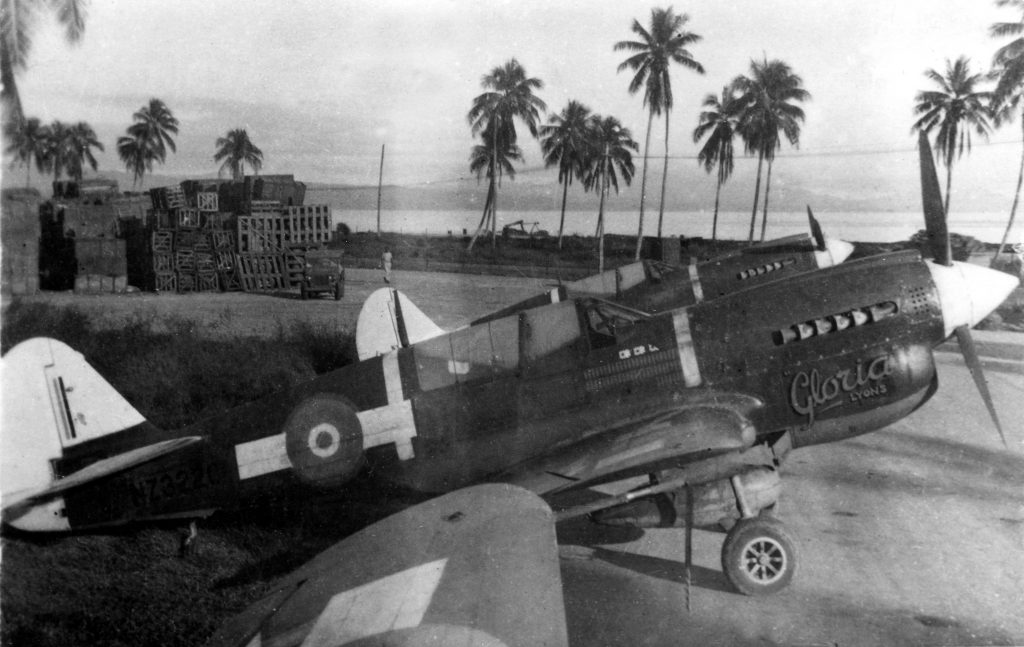
P-40N-20-CU Warhawk, s/n 43-22962, was delivered from the factory on 30 September 1943 and shipped to New Zealand. Upon arrival the fighter was assembled at Hobsonville in November 1943 and allocated NZ3220. Transferred to Torokina airstrip, Bougainville, initially as part of 18(F) Squadron, the fighter thereafter served with 19(F) Squadron and ended its combat tour with 17(F) Squadron. During its tour the P-40 was one of the many in the overall care of 4 SU. These units remained in the front line to service whichever squadrons were operational in the area at that time.
Extracts taken from the Operations Record Book (ORB) of 4 Servicing Unit, RNZAF:
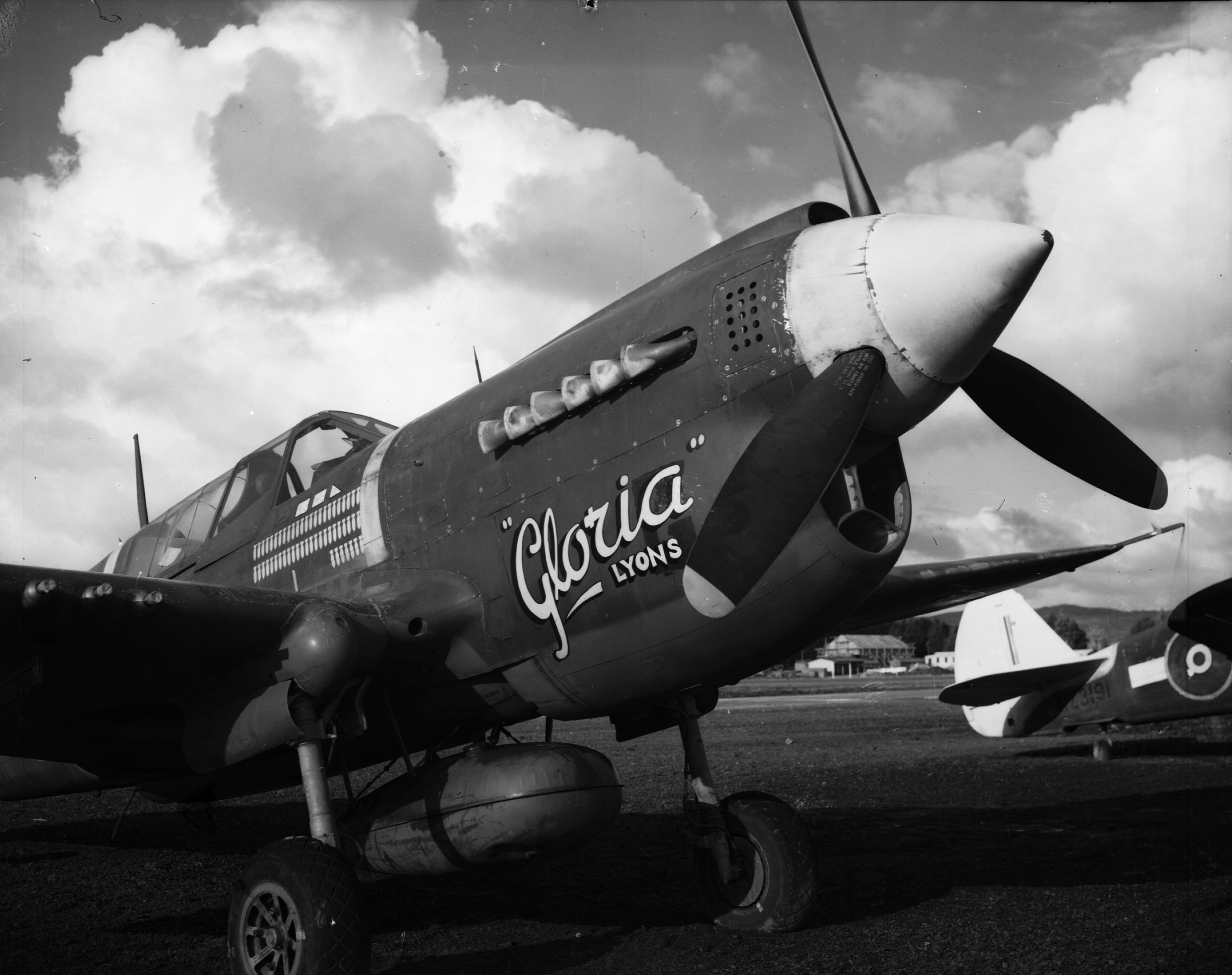
26/12/43: At this stage it would be wise to introduce “Gloria Lyons”. Warhawk NZ3148 was painted in bold letters on the front cowling with the name. It had come to the notice of No. 4 SU personnel that a Gloria Lyons was in Christchurch Hospital due to an illness that would keep her bedridden for 2 years. This struck a note of sympathy in all and in an effort to help her pass the hours everyone decided to adopt her as Squadron Mascot. Hence her name was painted on an aircraft, a photo of which was to be sent to her plus any information as to the aircraft it shot down. The enormous sentiment this aroused in the unit was extraordinary and Gloria Lyons’ mail must have increased considerably. This undoubtedly must have given her immeasurable happiness and to date all are eagerly awaiting her reply.
9/2/44: NZ3148 “Gloria Lyons”, piloted by Sgt C.S. Wood of 18 Squadron, crashed when the engine cut out on the strip. This aircraft was a total wreck and was written off, but “G” NZ3167 has been designated “Gloria Lyons II”, this machine being in honour of the unit’s mascot, Miss Gloria Lyons of Christchurch.
23/2/44: Another sad incident in No. 4 SU when NZ3167 “Gloria Lyons II” was lost. The pilot was again Sgt C.S. Wood of 18 Squadron, who bailed out 6 miles west of Torokina, following fuel trouble. He was unhurt. To keep the spirit of Gloria Lyons in the unit another machine, NZ3220, was named “Gloria Lyons III” to carry on the good work for the unit and also for the interest of the girl mascot who it is named after.
1/6/44: The end of May and early June saw feverish activity in the preparation of 17 P-40s for their return to NZ whilst still maintaining normal flying commitments. The personnel concerned made a credible effort indeed and maintained 16 aircraft for the strike force for the last six weeks of P-40s operations. During this period 1,050 bombs were dropped, these consisting of 500- and 1000-pound General Purpose (G.P.) and 500-pound incendiary clusters.
3/6/44: The following is an extract from the End of Tour Report for No 17(F) Squadron: During the period of this tour 1672 hours were flown comprising 87 missions. Practically the entire work of the Squadron consisted of bombing missions over Rabaul areas and bombing and strafing on Bougainville Island together with courier flights to Green Island and an odd Dumbo (search and rescue, usually a PBY Catalina) escort. On all the missions carried out, low level attacks were used carrying 500-pound G.P. bombs with 4/5 seconds delay fuses and 500-pound incendiary clusters with a height of release at 100 ft. Many strafing attacks were made and quite good successes were obtained. The use of the incendiary clusters was not so successful as we could not get sufficient coverage over small targets. Experiments were made with belly tanks filled with a 50% ratio of oil and petrol and with incendiary fuses attached. This home-made bomb proved particularly effective, but the squadron was denied the use of them due to the shortage of tanks.
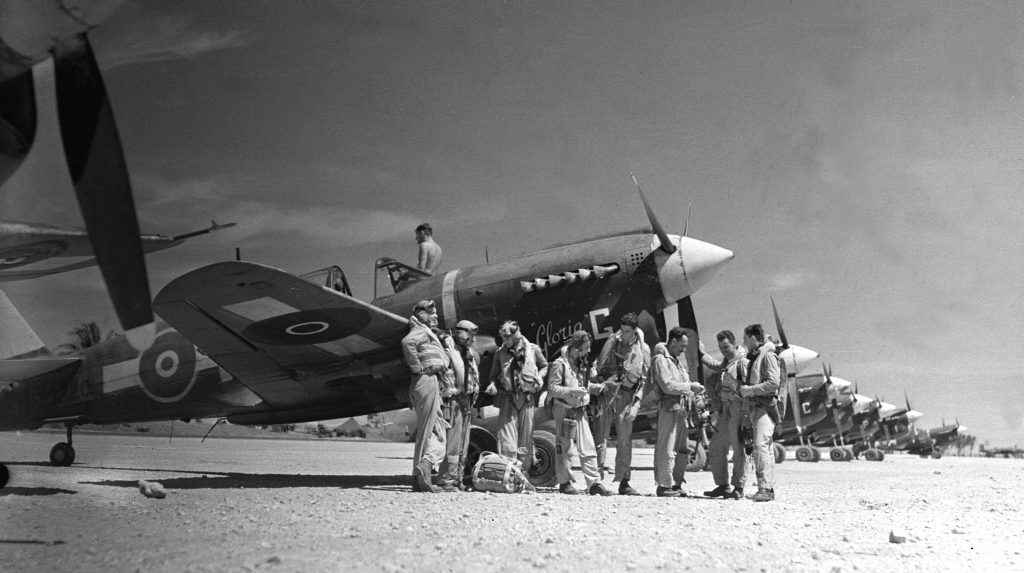
4/6/44: Early this morning eight P-40s including NZ3220 departed for New Zealand after finishing their time in the Pacific under the RNZAF Fighter Wing and maintained by No. 4 SU. There was a dull feeling amongst the maintenance personnel when the last aircraft took off as these aircraft had been with the SU for approximately 9 months and the history of these aircraft had built up for No. 4 SU was outstanding. NZ3220, “Gloria III” was the pride of the flight as personnel had painted on the side 55 bombing missions and two and a half Japanese flags to denote the operations that Numbers I, II, and III Glorias had carried out since the first aircraft carried the name. On the fuselage roundels personnel who at various times worked on the aircraft had signed their names and it was lacquered over with clear dope to preserve the writing. This aircraft is to be shown at all the main centres in New Zealand as there has been much publicity in various well-known papers in NZ regarding Gloria Lyons and the aircraft which represented her overseas. A scroll was drawn up by the Adjutant of No. 4 SU thanking Gloria Lyons for the interest taken in the Unit and this was signed by all personnel of No. 4 SU and forwarded to Gloria. Various reports received over here indicate that the interest taken by personnel of the unit and pilots who have at various times piloted the aircraft has improved Gloria’s health considerably and in letters received from her she cannot thank the Unit enough in the way they have taken this interest in her.
5/6/44: This day also marks another stage in the history of 4 SU when the first of the long-awaited F4U Corsairs touched down on the Torokina Strip. 18 aircraft were received. These aircraft were ferried from Guadalcanal by pilots of the relieving squadron, namely No. 18(F) Squadron. The trip was uneventful and all landed safely. NZ5233 “G” was named “Gloria Lyons” to carry on the work and name of the previous Glorias.
In part two …. The return of Gloria Lyons to New Zealand, and rescue by John Smith in 1965.
This blog was first published in The Aero Historian – the Journal of the Aviation Historical Society of New Zealand Inc. Thanks to John King and Team Curtiss who put it together.