Tall Tails
 Suitable for all ages
 Thérèse Angelo Wing
 Suitable for all abilities
 Free
Free
Our Tall Tails exhibition features the mounted tails of the C-130 Hercules and P-3 Orion, this new exhibition brings visitors closer to two extraordinary aircraft and the stories they carry. It also highlights the importance of finding a permanent home for them, as the Museum continues to fundraise through the Home for Heroes project.
Tall Tails invites visitors to discover why these aircraft matter, what they represent, and how they can help ensure they are preserved for future generations.
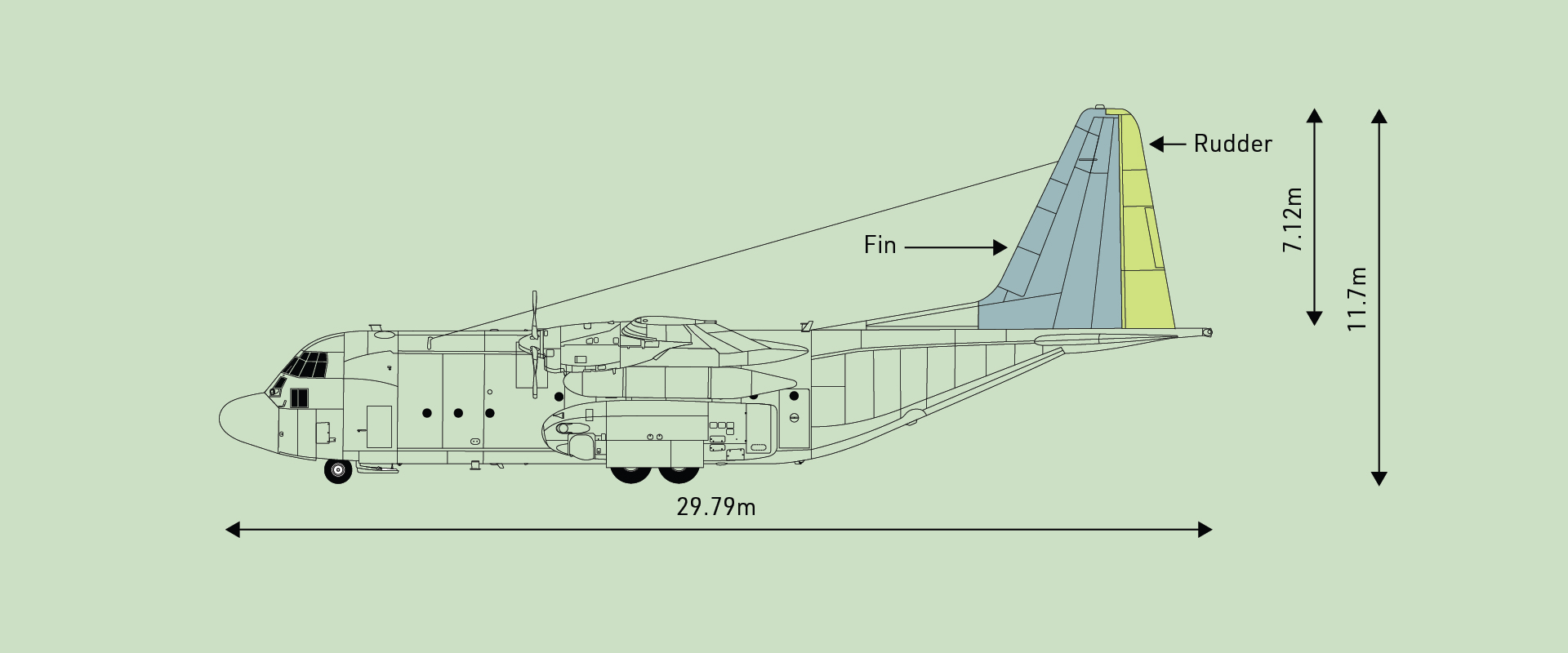
Side view of C-130H Hercules showing fin and rudder fitted.
C-130H Hercules Fin and Rudder
The fin and rudder assembly on the C-130H Hercules is mounted directly to the top of the rear fuselage, just above the loading ramp, using 278 high-tensile steel bolts. These bolts range in size, with the largest being the 36mm, 28mm and 25mm diameter main bolts that secure the fin structure to the fuselage, down to the 5mm bolts that attach the fillet around the base of the fin to the fuselage. There are 232 of these.
The C-130H Hercules fin is 7.12m tall and when fitted this gives the aircraft an overall height of 11.70m. The fin and rudder have a total combined weight of 485kg and are made from lightweight, but strong, aviation-grade aluminium.
No.40 Squadron RNZAF badge.
No. 40 Squadron
No.40 Squadron’s badge carries the te reo Māori motto ‘Ki nga hau e wha’ (To the four winds) and depicts a mariner’s compass to illustrate the types of worldwide operations the squadron deploys to. No.40 Squadron aircraft have worn this compass emblem since 1965.
Located at RNZAF Whenuapai, No.40 Squadron currently operates five C-130J-30 Super Hercules and two Boeing 757-2K2s. The squadron saw action throughout World War Two in the Pacific, helped supply New Zealand forces fighting in Korea, Malaya, Vietnam, East Timor, Afghanistan, and Iraq, and provided transport to United States and United Kingdom forces in the 1990 Gulf War.
Humanitarian missions have included flying in the first Cyclone Tracy relief supplies to Darwin, assisting victims of the Bali bombing and the Boxing Day tsunami. A major operation for the squadron was the Christchurch earthquake in February 2011 which saw nearly the entire fleet working around the clock distributing personnel, freight, search and rescue teams and medical supplies to the shattered city.
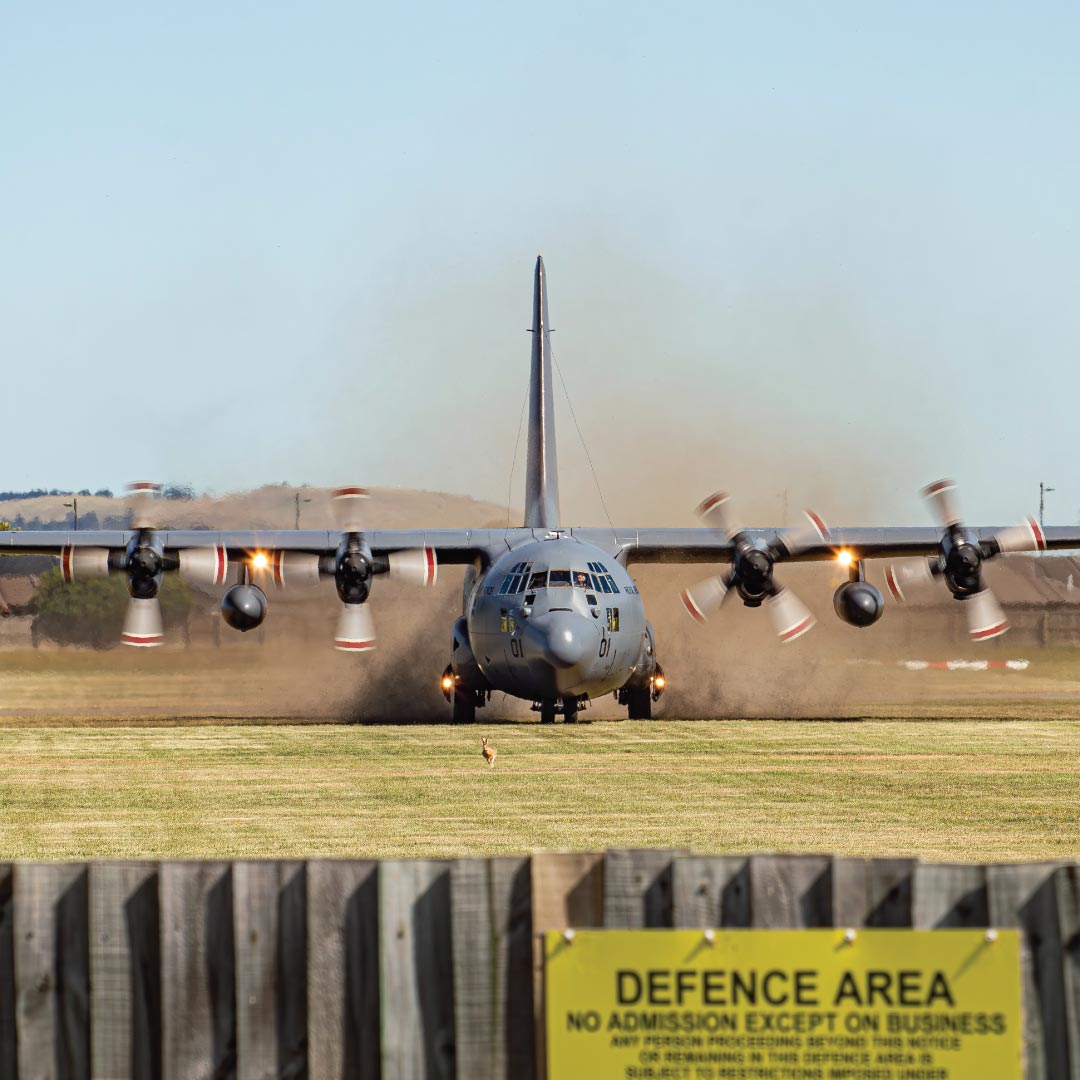
C-130H(NZ) Hercules NZ7001 lands for the final time at Wigram on 19 February 2025, surprising one of our resident hares. Photo courtesy of Tom Heslop.
C-130H(NZ) Hercules, NZ7001
As well as being the first RNZAF C-130 Hercules, NZ7001 was also the very first of the ‘H’ model Hercules to be manufactured by Lockheed. As a result it was used for extensive flight testing before being released to the RNZAF.
Its first operational deployment took place in July 1965 when it helped to transport 161 battery, NZ Army, to Bien Hoa in Vietnam.
Throughout its 60-year operational career, NZ7001 has completed more than 33,000 flying hours while delivering humanitarian aid, supporting New Zealand’s Antarctic programme and delivering essential cargo into combat zones as part of a commitment to its allies and partners around the world.
Of the five RNZAF C-130H(NZ) Hercules aircraft, NZ7001 will be the only example placed into a museum for preservation, here at the Air Force Museum of New Zealand.
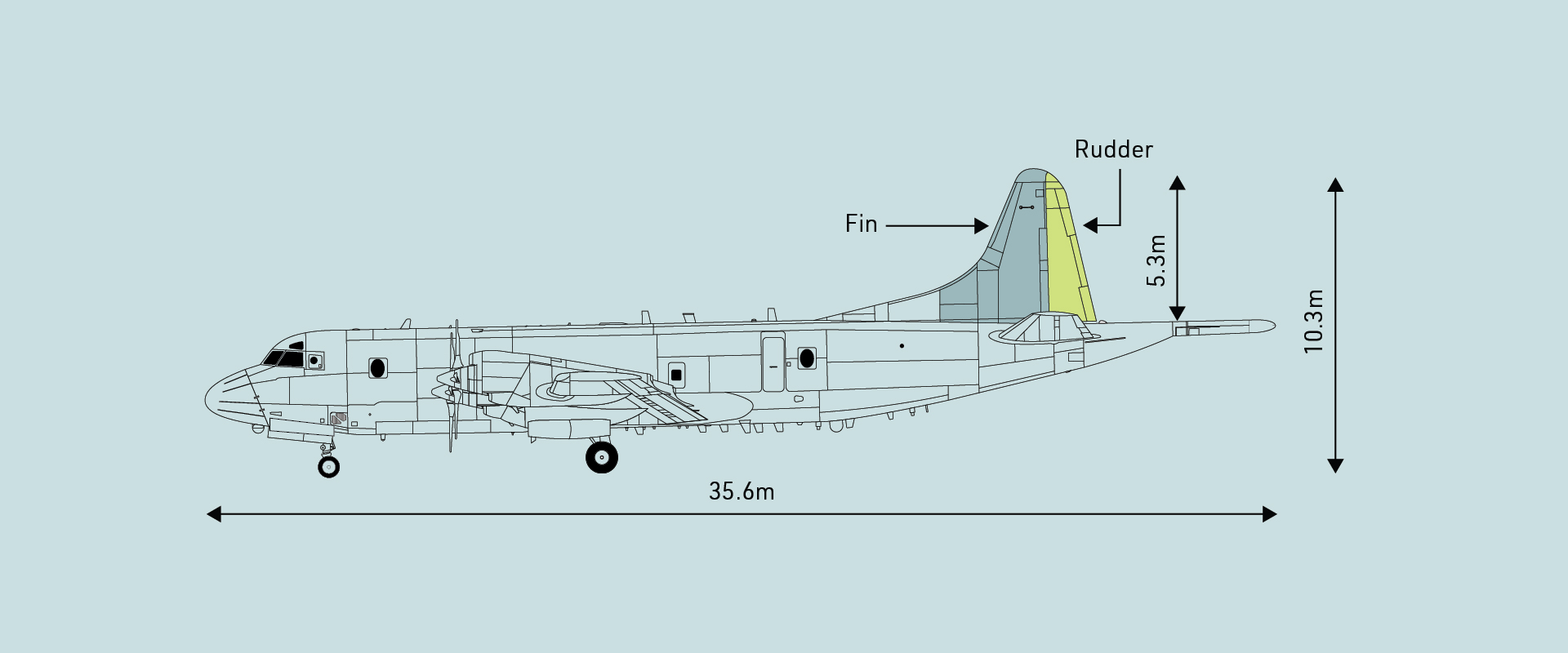
Side view of P-3K2 Orion showing fin and rudder fitted.
P-3K2 Orion Fin and Rudder
The fin and rudder assembly of the P-3K2 Orion is an integral part of the aircraft’s rear fuselage and is structurally tied to this area via the vertical framing members that you can see protruding at the bottom of the fin.
It is secured to the rear fuselage structure with 828, 5mm high-tensile steel screws. This means that removing the fin from the Orion is a very labour-intensive and lengthy process.
The P-3K2 Orion fin is 5.3m tall and when fitted this gives the aircraft an overall height of 10.30m. The fin and rudder have a total combined weight of 251kg and are made from lightweight, but strong, aviation-grade aluminium.
No.5 Squadron RNZAF badge.
No. 5 Squadron
No.5 Squadron’s badge carries the motto ‘Keitou kalawaca no wasaliwa’ (We span the ocean). These Fijian words reflect the squadron’s operations over a wide area of the Pacific. It also depicts an Albatross in flight to illustrate the long distances that these operations involve. No. 5 Squadron aircraft have worn this Albatross emblem on their fin since 1966.
Located at RNZAF Ohakea, No.5 Squadron currently operates four Boeing P-8 Poseidon aircraft in the airborne surveillance and maritime patrol role. The squadron was formed in November 1941 as the RNZAF expanded into the Pacific region and was initially based in Fiji. In 1966 the squadron was moved to Whenuapai as it took delivery of new Lockheed P-3 Orions.
As well as ensuring New Zealand’s Exclusive Economic Zone and providing vital air sea rescue support, No.5 Squadron aircraft have been deployed to assist internationally on several occasions. These have included operations in support of Operation Enduring Freedom by patrolling the Arabian Sea and Gulf of Oman, the search for Malaysian Airlines missing flight MH-370 and deployment to the Middle East where the squadron flew over 1000 hours supporting maritime security in the region, preventing piracy and the smuggling of narcotics and illegal weapons.
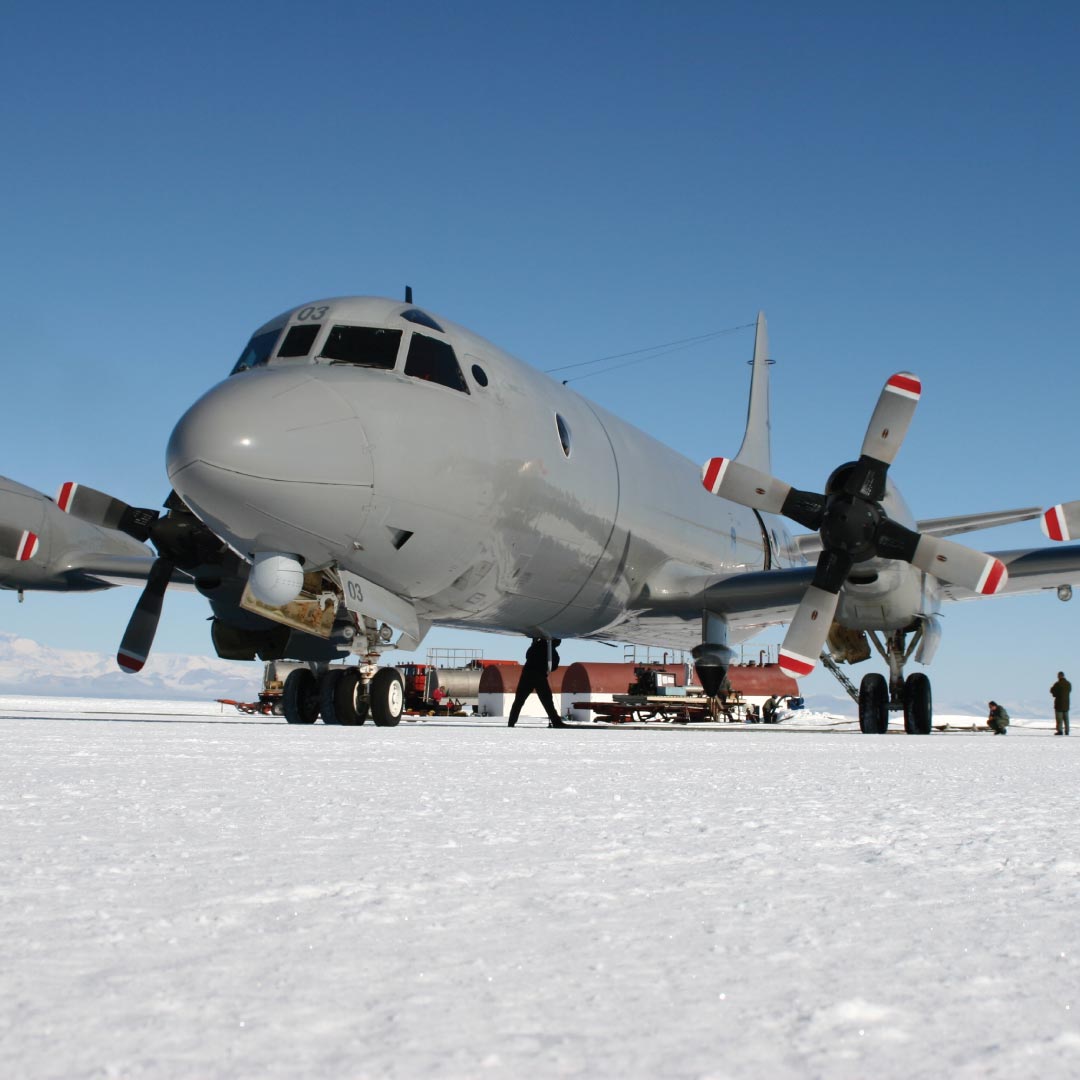
Orion NZ4203 on the ice in Antarctica. The first successful landing of an RNZAF Orion there in 2006. NZDF Public Affairs.
P-3K2 Orion, NZ4203
Built by Lockheed in Burbank California in 1966, NZ4203 entered service with the RNZAF in April 1967.
By the time the Orion was retired from service in 2021, it had completed 27,000 hours of flying while carrying out patrols of New Zealand’s Exclusive Economic Zone, taking part in military exercises and operational deployments around the world, and saving many lives while on search and rescue duties. It was also the first of the RNZAF Orions to land in Antarctica.
NZ4203 is preserved at the Air Force Museum of New Zealand as the only surviving RNZAF example of the type.
Help build our new exhibition hall: a forever home for the C-130 Hercules and P-3 Orion
These towering tails give you a glimpse of the scale of the aircraft they belong to. The C-130 Hercules and P-3 Orion are large-scale aircraft, and they’re too big to fit even our largest display space.
Our task is to ensure these nationally significant aircraft can be preserved, shared, and experienced by all New Zealanders for generations to come.
You can read more about our new Exhibition Hall that will house these retired aircraft here: Home for Heroes | Project Overview