
Superstition played a major role in the lives of many airmen during World War Two.
Faced with the ever-present threat of death or serious injury, and being witness to the sudden and often traumatic loss of friends and comrades, many turned to emblems of luck or engaged in specific pre-operation rituals to help them cope with the danger. Warrant Officer John Nagle ‘Jack’ Larsen and his crew were no different, and Larsen was fortunate enough to have two lucky charms.
Larsen joined the RNZAF in October 1942. He completed his initial training as a Navigator in the North Island before departing for Canada in October the following year. After completing training in Canada, he arrived in England early 1944, joining No. 75 (NZ) Squadron RAF in January 1945.
His first lucky charm was a gift from his mother. Raised in a devout Catholic family, Larsen attended St Patrick’s College in Upper Hutt. Before departing for Canada, his mother presented him with a crucifix shaped pendant featuring Saint Christopher carrying the Christ Child across a river. Popularised around the 7th century AD, Saint Christopher became the patron saint of travellers offering protection from accidents, storms and sudden death. Larsen kept this token close, wearing it under his uniform throughout his service overseas.


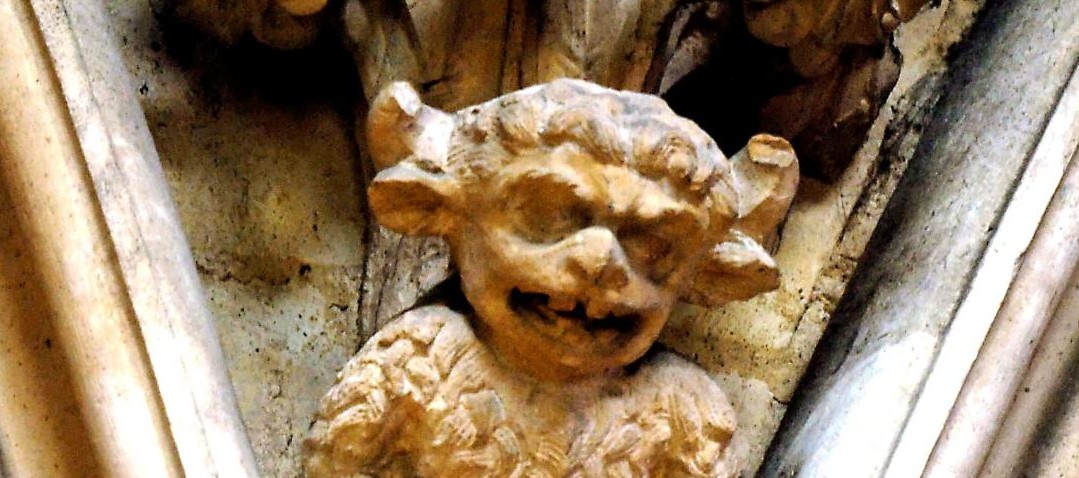
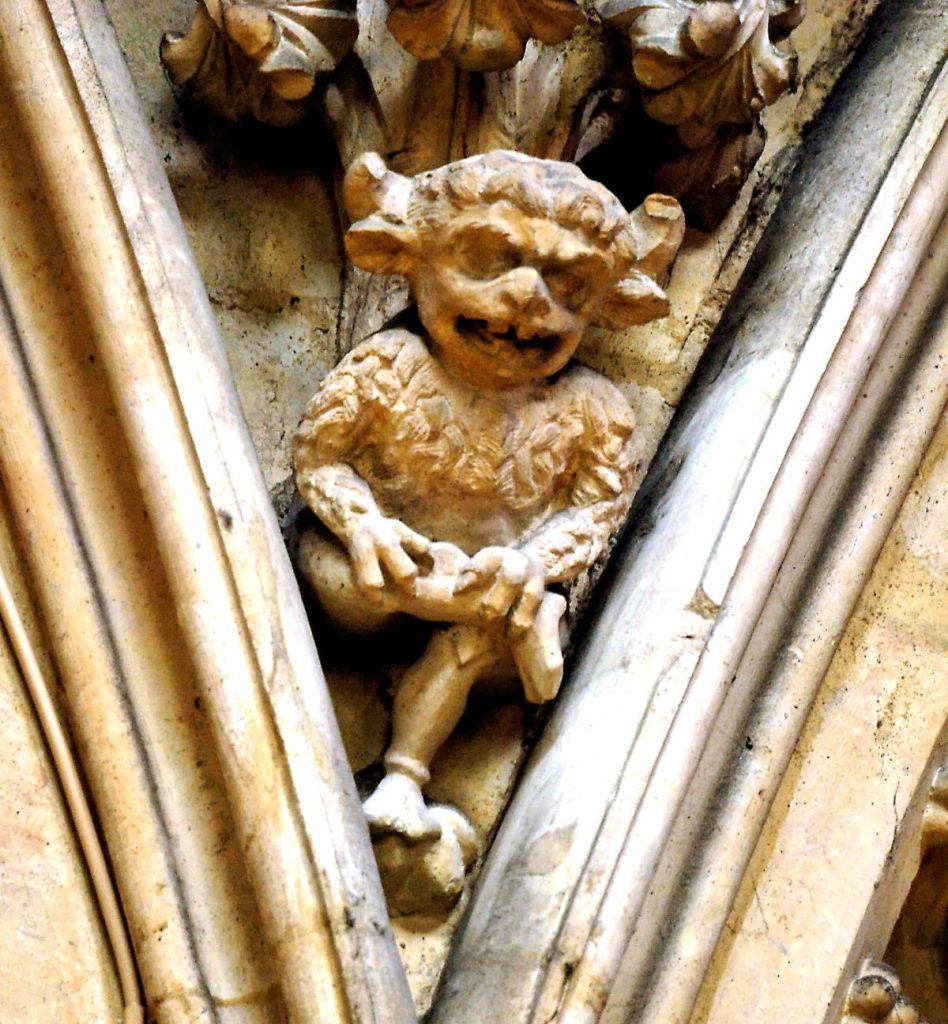
Larsen purchased his second charm after a visit to Lincoln Cathedral while posted to 75 Squadron. Larsen and the rest of his crew, including fellow New Zealanders pilot Flying Officer Ivan Silvester Carroll and wireless operator Flight Sergeant Bernard Hugh Davidson, visited the cathedral and were quite taken by a mischievous figure perched between two arches on the north side of the choir: the famous Lincoln Imp.
The crew decided to visit a nearby jeweller and purchase an imp of their own to bring them each a bit of luck. Being a good St. Pat’s old boy Larsen had his imp blessed by a priest for extra protection.
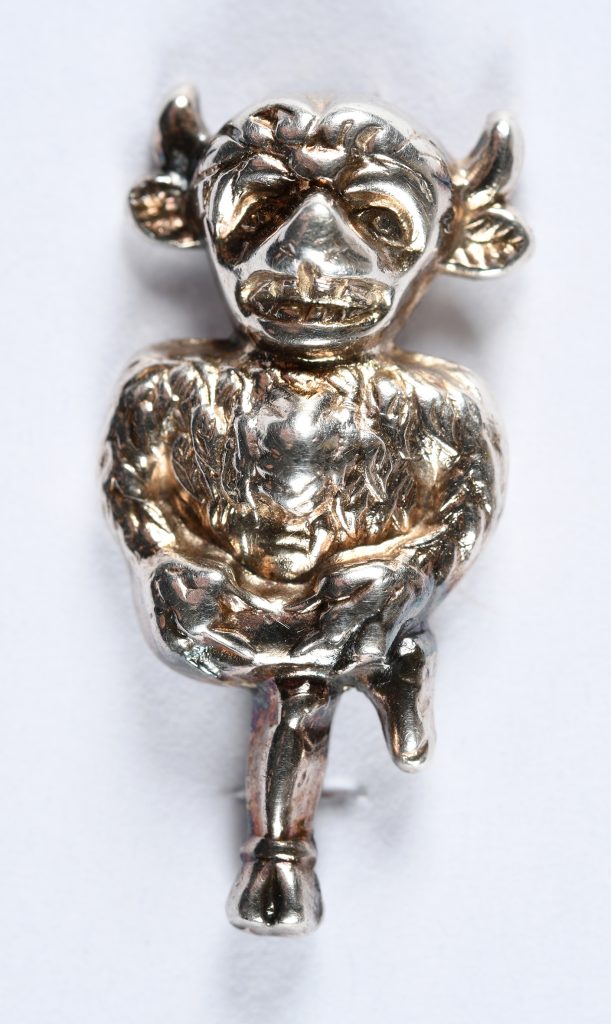
Carved in the mid-1200s, the imp’s presence in the cathedral has given rise to numerous folktales and legends explaining how he came to be there. Most of these stories refer to the imp causing chaos in the cathedral and an angel turning it to stone to put a stop to its scampish antics. The imp was popularised as a souvenir and good luck charm by Lincoln jeweller James Ward Usher in the 1870s.
It became such a recognisable symbol of Lincoln that it was later adopted by Lincoln City Football Club, nicknamed ‘The Imps’.
Larsen’s lucky charms saw him through the waning months of World War Two without incident. Flying with 75 Squadron, he completed several operational flights, including at least five raids, three supply dropping missions and one Prisoner of War repatriation flight after Nazi Germany was defeated in May 1945. Larsen returned to New Zealand in 1946 after a brief sightseeing trip across post-war Europe. Heavily effected by what he saw – particularly the impoverished conditions many children were living in – he decided to take up a career in education. He graduated from Canterbury University in 1953 with a Bachelor of Arts and Diploma of Education becoming a teacher. Later, he worked in children’s welfare.
Larsen passed away in August 1964.