
The Air Force Museum of New Zealand has teamed up with the Ferrymead Aeronautical Society to share resources to speed up the restoration of a unique RNZAF de Havilland Mosquito.

For the past 26 years the aeronautical society has been working on the restoration of Mosquito HR339/NZ2382 at its Ferrymead Heritage Park site in Christchurch, but some parts have been scarce.
In a new heritage collaboration, the Air Force Museum agreed to open up its stores of Mosquito parts to the restoration team at Ferrymead, providing a treasure trove of much needed spares for the project.
Dag Guest, who has been working on the restoration for 26 years at Ferrymead, said the collaboration was a ‘gamechanger.’
“It’s superb to be able to get access to the spares. There are many parts that we were missing, which we can use or copy. Within a few seconds of being here I’d seen a flap shroud that will save 60 hours of work for me. It is fantastic – an absolute gamechanger for us.’’
Air Force Museum of New Zealand Collections Manager Darren Hammond said the parts came from a number of de Havilland Mosquito aircraft that had been saved and stored since the museum opened.
“We do not have the time or resources to put into a Mosquito build from the parts we have – and Dag is 26 years into his restoration.
“It makes absolute sense to help with whatever we can, so that collectively we can save this incredibly rare and significant aircraft which will remain in public ownership in New Zealand as part of this country’s military aviation heritage.’’
The de Havilland Mosquito was an incredibly successful and innovative fighter-bomber aircraft which played a pivotal role in World War Two.
Made mostly of plywood, it was easily manufactured without compromising performance.
The aircraft was built by the Standard Motor Company at Coventry in the UK in mid-1944 and was allocated to 487 Squadron RNZAF on 23 November 1944 with the squadron code letters EG-J.
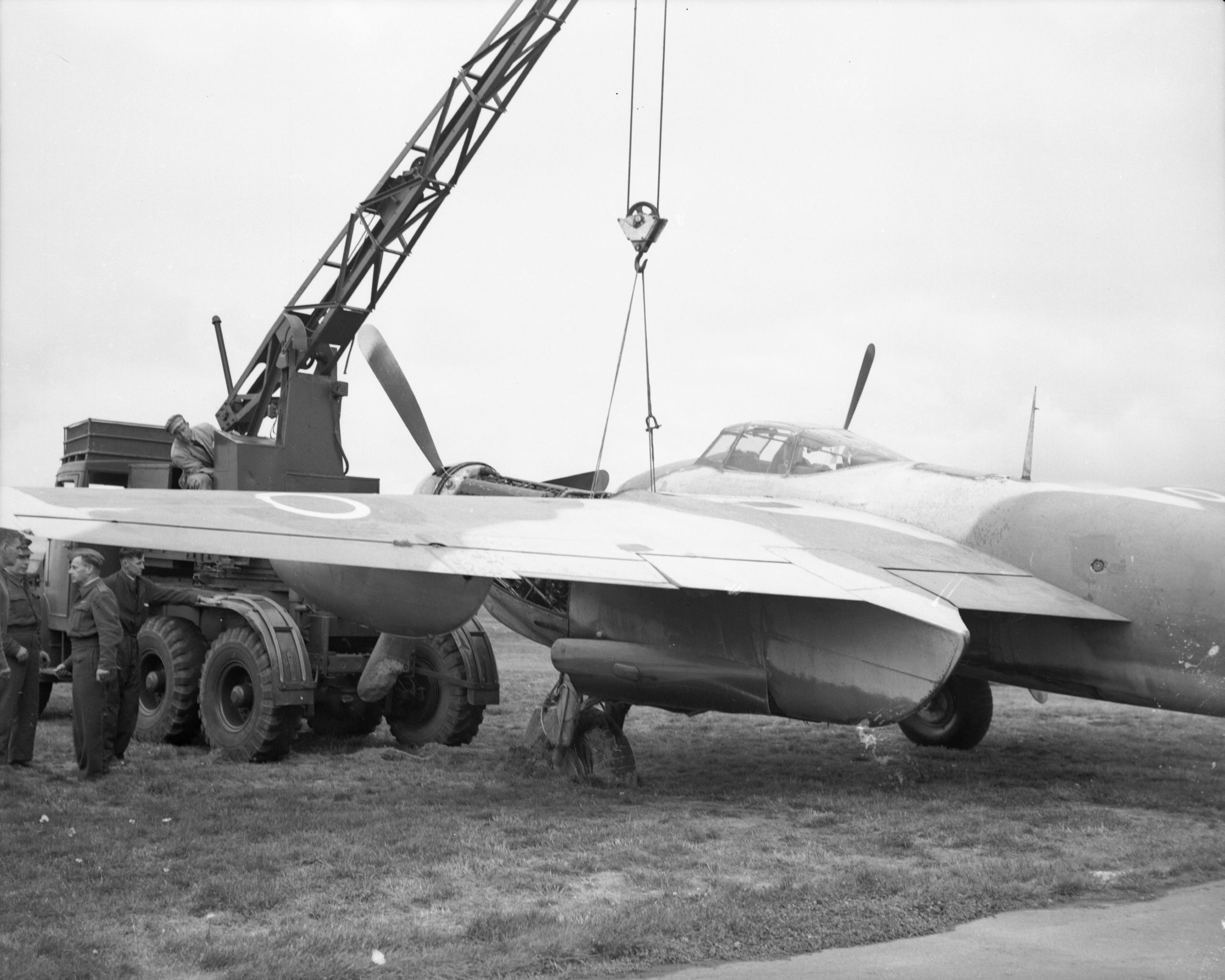
After the war the Mosquito was purchased by the RNZAF and flew to New Zealand. After an airfield accident at Wigram in 1952 the aircraft was sold to a farmer and cut into four pieces and moved to Pigeon Bay on Banks Peninsula.
WgG56-48