

One hundred years ago, our pioneering military aviators suffered their first fatality on home soil when a Bristol Fighter crashed on a training flight over Christchurch. It highlighted the dangers faced by these early pilots and was headline news across the country. This is the story of how it came about and what it meant at the time to a fledgling service.
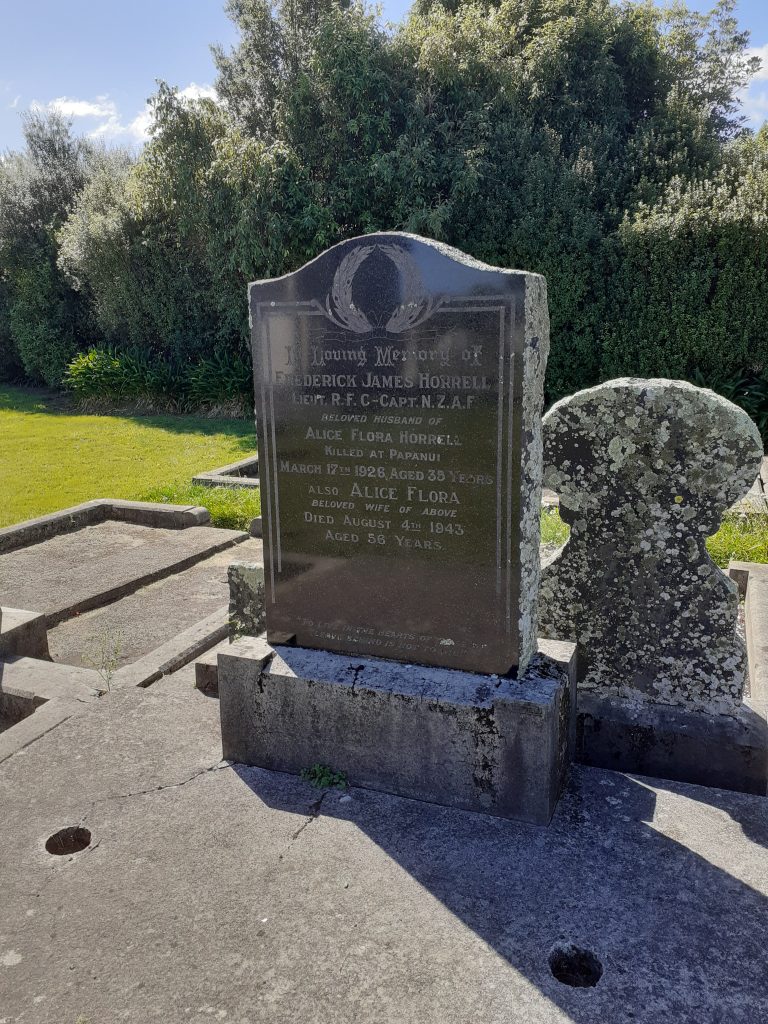
Frederick James Horrell (who was known as Jim or Jimmy), was born in Woodend, North Canterbury on 21 September 1890. He attended Rangiora High School before joining the family sheep farm. When war boke out, he joined the 1st Canterbury Mounted Rifles and embarked for Egypt on 15 October 1914.


They arrived on 3 December 1914. His first taste of action was at Gallipoli on 9 May 1915. Like many on the cramped unsanitary peninsula, he fell sick and was evacuated hospital to Mudros in June for a week. Returning to Gallipoli, he was wounded on 21 August 1915. He was eventually evacuated to England and after recuperation, returned to join his unit on 30 May 1916.
It was at this point Jim wished to join the Royal Flying Corps, and he transferred on 17 February 1917 and attended No. 3 School of Military Aeronautics in Egypt and was commissioned as an officer. After training in England, he was posted to France and joined No. 56 Squadron, a fighter unit on 18 July 1917. The strain of his service now took over and in September he was hospitalised and returned to England. He returned to flying duties as an instructor, before being seriously injured in a crash on take off on 7 July 1918. He returned to service as a fighter pilot after the Armistice but returned to New Zealand in May 1919. For his services during the war, he was Mentioned in Despatches.
Jim returned to farming, but in 1923, the New Zealand Government bought the assets of the Canterbury Aviation Company at Sockburn near Christchurch and at the same time created the New Zealand Permanent Air Force NZPAF, New Zealand’s first Air Force. Alongside this full time but small force, there was also the New Zealand Air Force (NZAF) of territorial reserve pilots. Given his experience and proximity to the now renamed Wigram aerodrome, Jim joined this force on 14 June 1923.
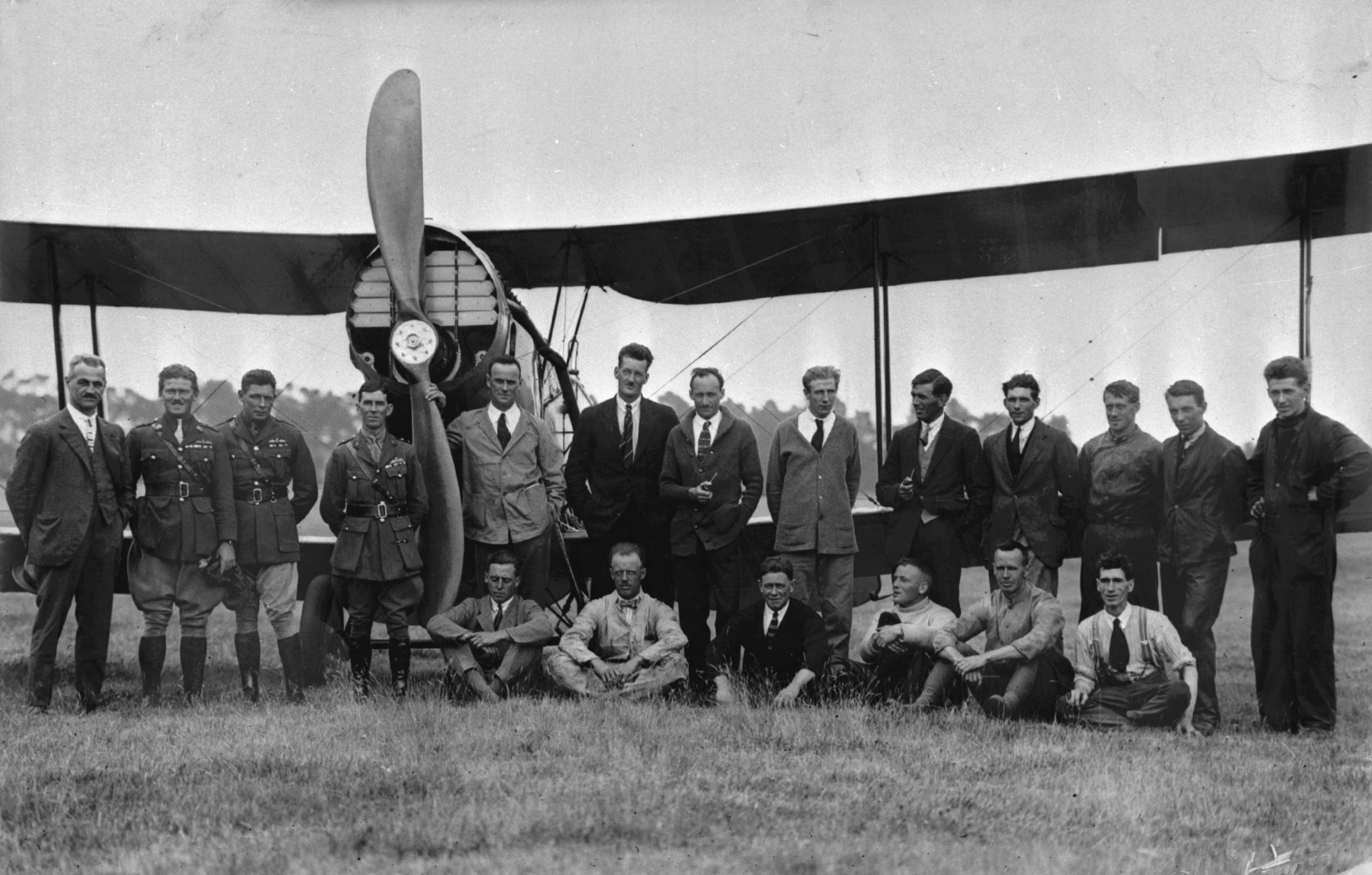
The NZAF held annual refresher courses at Wigram for its members to brush up their skills and learn new ones, given that they had all trained or flown in World War One. Jim attended five of these, sometimes flying to the family farm and landing to take tea with his mother. The aircraft they flew were ex World War One types, procured from the Royal Air Force.
L-R: Back; TM Wilkes, JL Findlay, LM Isitt, T Denton, G Hood, M MacGregor, N Barlow, JC Mercer, Drewett, J Park, Merrin, H Smith, S Simpson.
Front; F Gordon, Musgrave, F Horrell, D Inglis, Townsend, Sorrell. Image: WgG2433-78
By 1926, he was a Captain in the NZAF and attended the refresher course at Wigram as usual. However, fate was to ensure this was his last.
He reported for duty at Wigram on 9 March 1926. Having returned to Wigram from a funeral on 17 March 1926, he climbed aboard Bristol Fighter H1557 for a type handling demonstration. Also on board for instruction was Lieutenant P. A. Turner, who had been a driver and observer in the RFC in the war and was attending his first course. Also squeezed into the cramped Bristol was Lewis Reid. He was a well-known ex-jockey who was working at Wigram as a mess steward for the duration of the course. He was presumably along for the ride.
They took off from Wigram just after 5pm in the afternoon and after half an hour were over the city of Christchurch. Horrell performed one loop followed by a second at around 2000 feet. After the second loop, the aircraft went into a left-handed spin and never recovered. It plunged into the Methodist Orphanage rose garden on Harewood Road, Papanui, only metres from where the children were having their evening meal indoors.
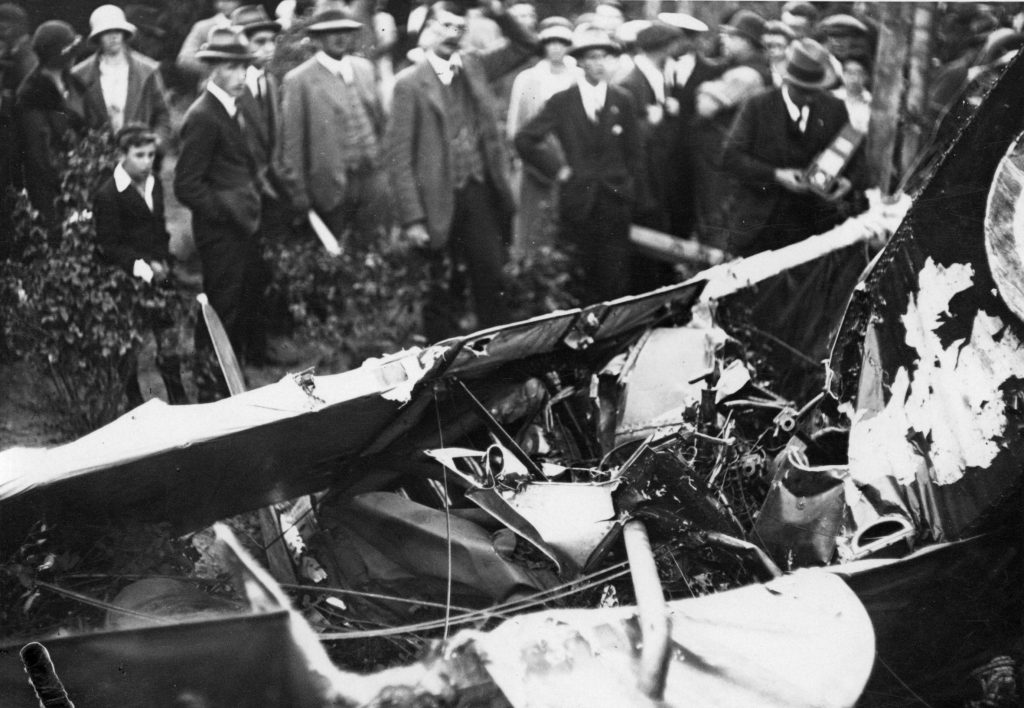
The Star newspaper described the aftermath:
“The grinding crash in the Orphanage grounds brought the children to their feet instantly, and a little girl brought news of the crash to the Matron M.F. James, she and others hurried to the spot, but already there were others giving assistance”.
The crash proved deadly for Jim, who died instantly from severe head injuries. Also killed was Reid, who died on the way to hospital. Turner was seriously injured but later recovered from his injuries. Jim was buried with full military honours on 19 March 1926 in the Rangiora Anglican Cemetery and Reid was interred at Bromley the following morning.
An inquest was held but the cause was not identified, though it was widely published that Horrell was ‘an excellent pilot’.
Flying at Wigram continued, despite the mystery of the cause. Captain Leonard Isitt, the commander at Wigram stated the reason in the Star:
“If anyone is killed in a tram or train smash, all the trains and trams do not stop running. Naturally the men did not want to fly for the sake of flying – it was essential that they should do so”.
Such was the tenacity and resilience of our air force then and it is spirit that remains today, although safety concerns would definitely result in a more safety-driven response in modern times.
Jim Horrell is commemorated at the Air Force Museum on our Roll of Honour, one of more than 4000 names.
Several items relating to his career have been generously donated to the collection by his family, providing a legacy of his service and sacrifice.