


When we think about mass escapes from prisoner of war camps involving tunnels, inevitably the escape from Stalag Luft III in 1944 is the one which is recalled. Immortalised by the 1963 movie starring Steve McQueen and books and documentaries, the ‘Great Escape’ has become the most famous tunnel escape in history. But it was not the first or indeed the most successful.

On the night of 23 July 1918, 29 officers escaped from a prisoner of war camp called Holzminden in Lower Saxony, Germany using a tunnel before it eventually collapsed. Of those men 10 made it safely to neutral Holland. The escape was front page news at the time and a boost for morale at home for the war-weary allies.
During the First World War, it was considered an officer’s duty to try to escape.
Indeed, it became a key activity and a way of keeping busy, given officers were not allowed to be put to work under the rules of war. They even retained soldier servants (batmen) in their captivity.
At some camps, officers were also allowed to leave the camp unaccompanied as long as they signed a document promising to return.
This was in stark contrast the less comfortable and stark working and living condition of non-officer prisoners, who not only had to work but also had awful living conditions scarce and poor rations and little access to medical care. Many succumbed to disease, cold and neglect.
Holzminden officers’ prisoner of war camp housed some 400 Entente officers and about 100 Entente soldier orderlies (servants) to look after them. The prisoners were a mixture of all the Entente powers including Russians, French, British (including the Dominions) and Belgians.
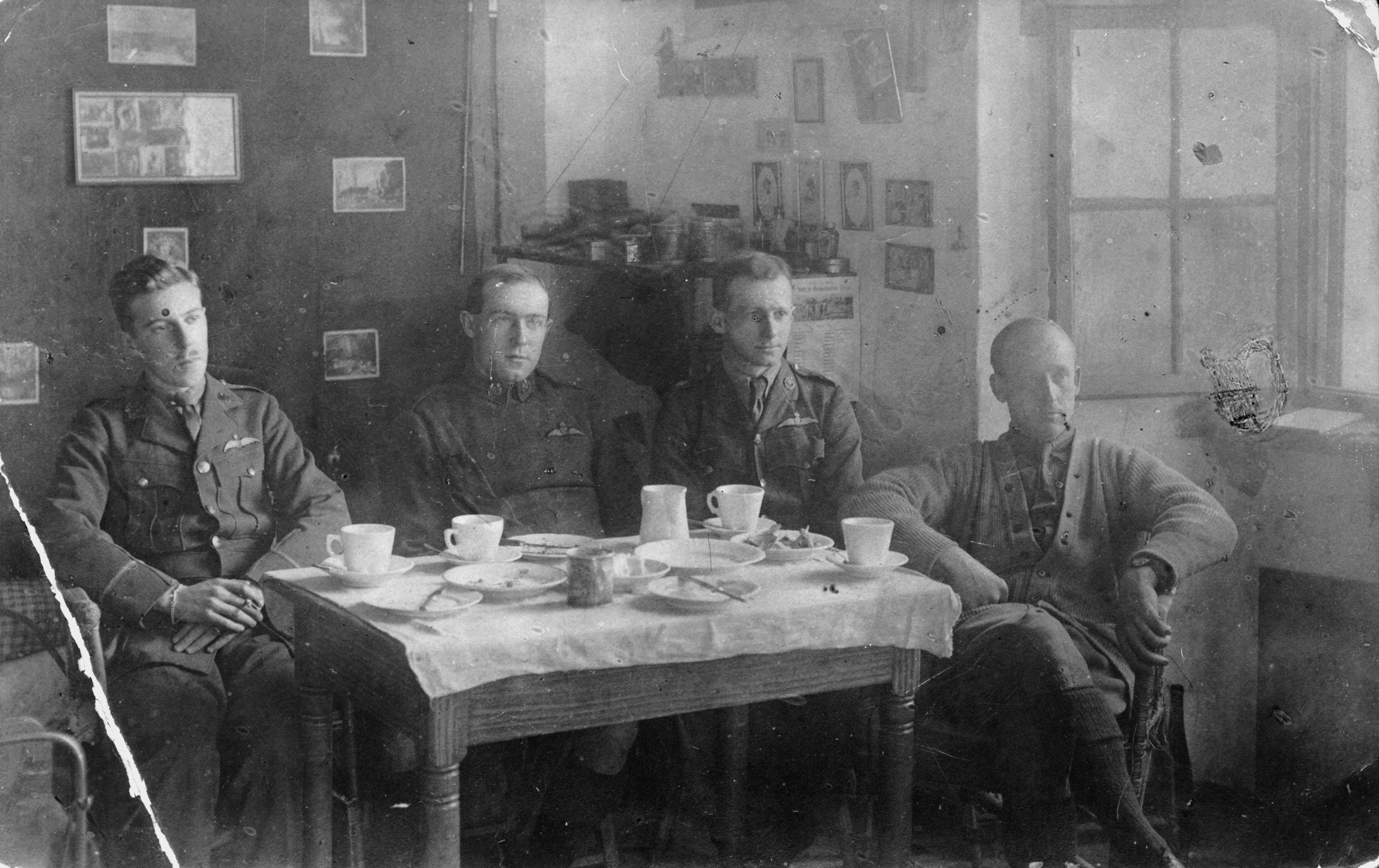
Several New Zealand airmen were held there, including Lieutenant Trevor ‘Tiny’ White (so named due to his small stature), who had been shot down and captured in 1917.
As we shall see, some of these New Zealanders played a key role in the escape itself.
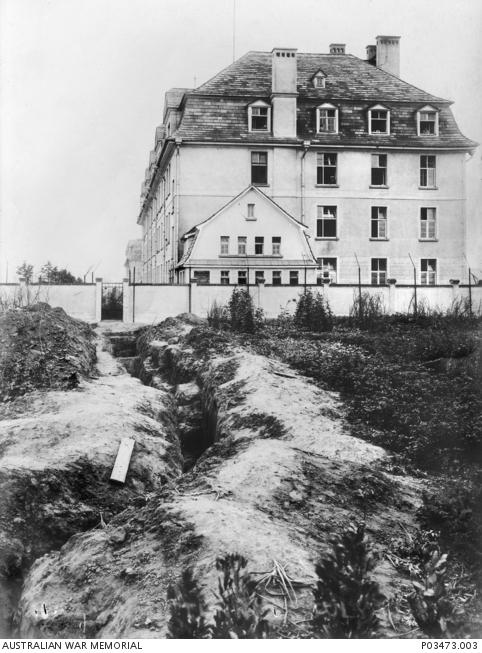
The camp was housed in an old infantry barracks and was considered very secure. It had to be as, just like Colditz Castle in World War Two, many of the prisoners were troublesome serial escapers, specifically sent there.
One of the career escapers was a New Zealander, Captain Edgar Garland. In fact, he was so prolific in his attempts, the German War Office referred to him as the ‘The Illusive Garland’. More about him later.
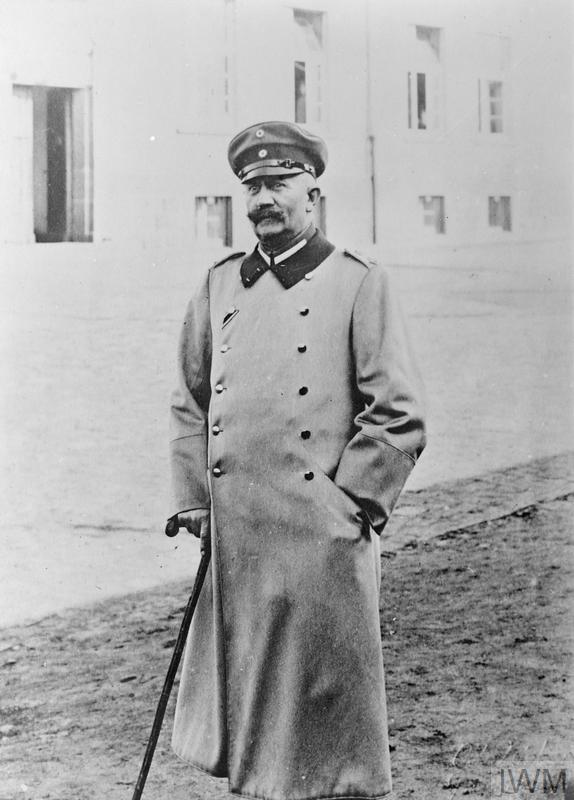
Holzminden was also notorious for the cruelty of its commandant Karl Neimeyer towards the prisoners. He was a reserve officer who had spent some years in the United States, picking up a little English and a strange (and to the prisoners, quite hilarious) accent. This led to him being known somewhat sarcastically as ‘Milwaukee Bill’.
The prisoners frequently defied and mocked him, leading to even more severe outbursts of rage and recrimination.
In the archives of the Air Force Museum of New Zealand, we have a copy of a document which shed much light on this successful escape and the camp itself.
New Zealander Lieutenant Edward Warburton of Dannevirke was captured in 1917 with his more famous British pilot, Major William Leefe Robinson VC (who had shot down the first German airship over Britain in 1916).

Warburton spent time at various camps during the war, including a stint at Holzminden.
After the war he wrote to his mother from England describing his experiences during the war, a copy of which is in the collection at Wigram. He wrote of his arrival at Holzminden and the escape fever gripping the camp:
On the 26 Sept (1917) the whole camp was moved to Holzminden which was an infantry barracks capable of holding 600 officers. Our arrival nearly filled (there were about 400 of us), the others being more recent captures sent here from Karlesruhe and Kiburg? Here we met Ellis an Heppel who took us into their room, a small one holding five people and got us to help them with their nefarious schemes for helping escapes. One of which consisted in making German uniforms and sending people out of the camp through the quarters of the German soldiers. By this time, it was getting late in the year and the weather was very cold and wet, so it was only possible to send our people who could speak German, so to travel on trams. 19 people got clear of the camp in this way before the exit was discovered. Thay were all caught and brought back.”
Warburton also described Neimeyer:
“All the time there were being excitements in the camp on account of Neimeyer (The Commandant). He seemed quite mad, and it was reported that he took drugs. There has been quite a lot about him in the London papers, so you have probably heard about him.”
Neimeyer’s twin brother, Heinrich also commanded a camp at Clausthal and had a similar reputation for cruelty and odd behaviour.
Despite the failure of the walk out plan in German uniforms, Warburton and his room-mates were not disheartened and decided to try another method as insurance.
This was a tunnel, which was a particular favourite method of escape of the British inmates in the camp. Warburton continued:
“Also a few days after we arrived, we started a tunnel. Six of us were concerned in this. The five in our room, the fifth being Trenhow and a large Canadian named Colquhoun. The idea being to nearly finish it and then leave it until suitable weather for going out arrived. Adams and I worked on this until the day we left for Schweidnitz. This tunnel was eventually used in July 1918. Twenty-nine people went out of it of whom fourteen (sic) got over the frontier and got home.”
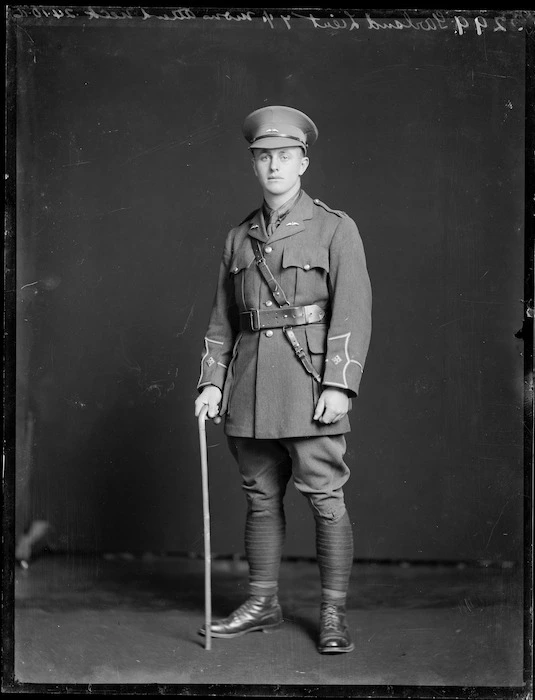
One of those who participated in the escape itself was New Zealander Edgar Garland, the serial escaper.
A Wellingtonian, Garland had trained at the New Zealand Flying School set up by the Walsh brothers at Kohimarama near Auckland. After joining the Royal Flying Corps, he had been shot down in his Sopwith Pup in August 1917.
Garland was waiting for his turn to use the tunnel when it eventually collapsed, burying the man in front of him. Garland, who was short but immensely strong stepped into action. In his book The Tunnellers of Holzminden (published in 1920), H.G. Durnford described what happened next
“The situation called for desperate measures, and fortunately the right man was at hand. A New Zealand Officer called Garland, who was high up on the waiting list, came up to the rendezvous to prospect. He happened to be about as strong physically as any other two officers in the camp and possessed the biceps of a Hercules. He at once volunteered to go down and try to pull out the rear-most man”.
Durnford continued:
“After about half an hour he succeeded in doing so, and the two collaborators in this severe physical exercise crawled back through the attic hole completely exhausted and dripping with sweat.”
In doing so, Garland lost his own chance to escape. One New Zealander did manage to get out. Lieutenant Neil MacLeod from Wakapuaka near Nelson, a British Army officer, was on the run for seven days. Hiding in a small wood near Osnabrück he was apprehended by a German soldier on leave walking with his dog and carrying a gun.
Along with all those recaptured he now faced the wrath of Neimeyer. They were placed in cells with no light on all night and were allowed few personal belongings. They were also court-martialled on 27 September 1918 and sentenced to six months’ imprisonment, although the Armistice meant this was not enforced.
Some of those who had not been able to get out were still desperate to escape. Garland made six more attempts, at one point spending three weeks hiding in a ventilator on the roof of one of the buildings.
After the war, many of the escapers stayed in touch and met at reunions. Some of them also played key roles in MI9 in World War Two, using their Great War experiences to assist Allied prisoners.
The fate of the Neimeyer twins is not known, although it was suggested they escaped to South America. Whatever their fate, they were never brought to justice.
The escape was much lauded in the newspapers of the Entente powers and several books, in addition to Durnford’s were written. Now largely forgotten, in many ways, it became a blue-print and no doubt offered inspiration to other Allied airmen who were captured in a second conflict just 20 years later and who would attempt such escapes of their own.