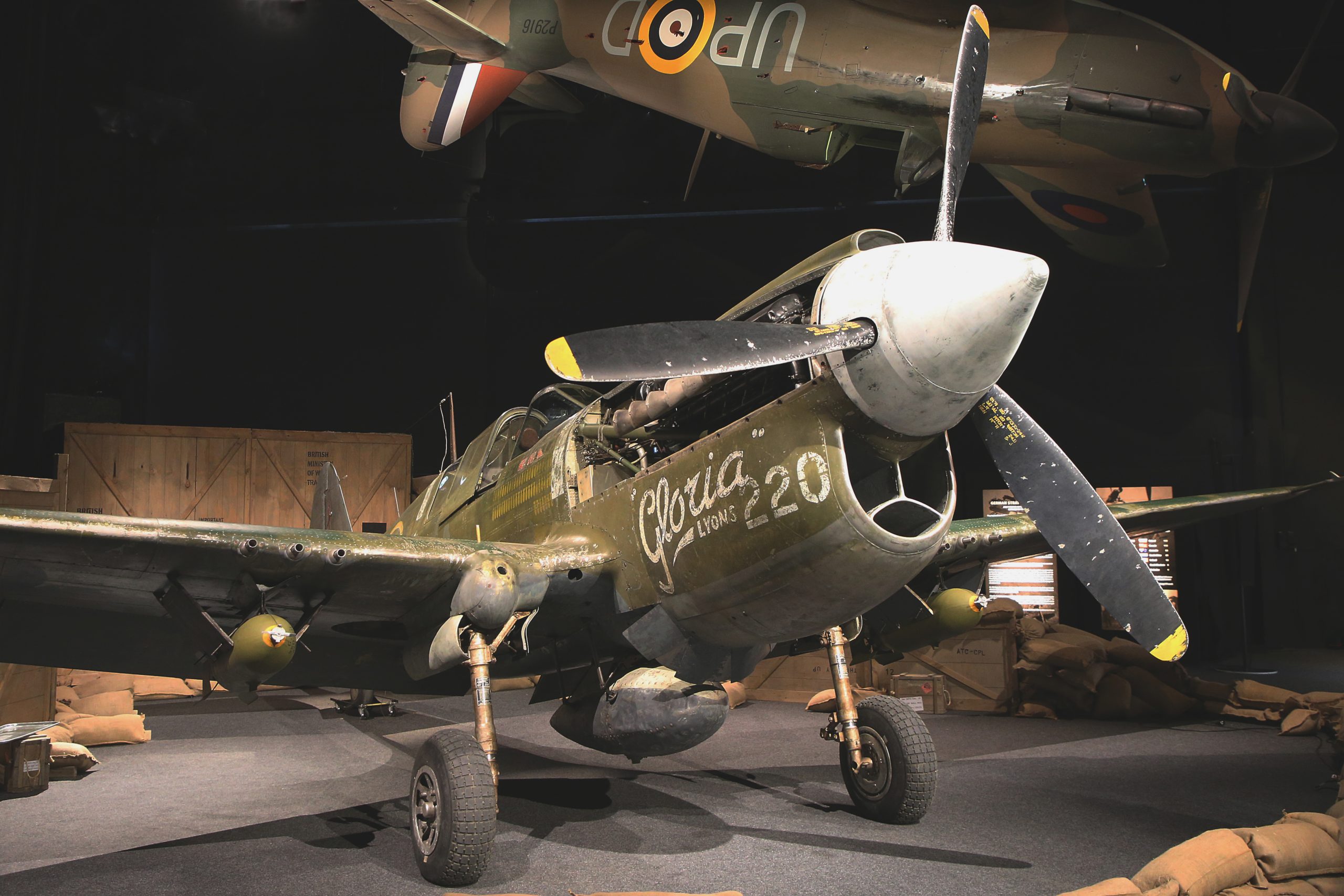
In the second part of a two-part series, the team from Aero Historian trace the story of a lucky RNZAF Curtiss Kittyhawk named Gloria Lyons, and why it survives to this day thanks to some extraordinary work by aviation conservation pioneers.

Upon its return to New Zealand, Curtiss Kittyhawk NZ3220 was assigned to 2 OTU at RNZAF Station Ohakea until at least April 1945. On 14 September 1944 Flt Lt Ian McKenzie, of 15 Squadron, flew NZ3220 from Ohakea to RNZAF Station Harewood, Christchurch, and four days later it was towed to Cathedral Square for the Air Force Week display, part of the Victory Loan Drive.
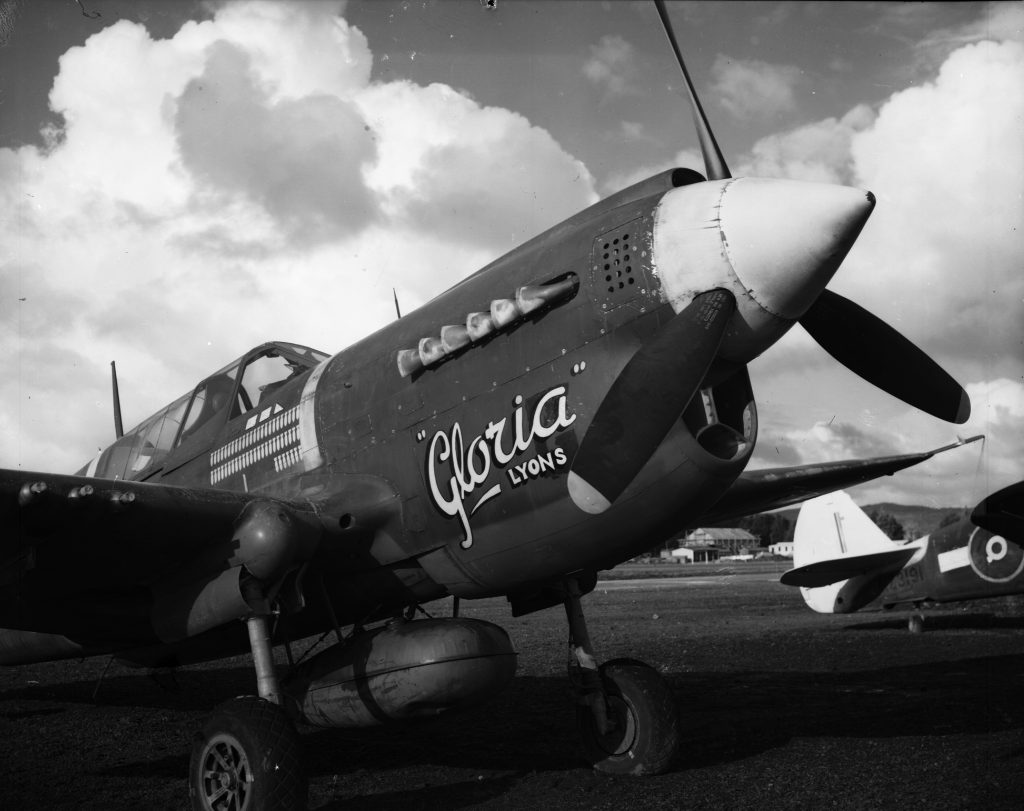
At that time it proudly displayed its bombing mission tally and 2½ Japanese Rising Sun flags denoting air-to-air kills. The latter would be the source of much mystery in modern times. More on this later.
The plan to bring Gloria Lyons herself by ambulance from Christchurch Hospital to see ‘her’ aeroplane was thwarted on the Monday due to rain, and they had hoped to bring her later in the week, but for reasons unknown this did not happen.
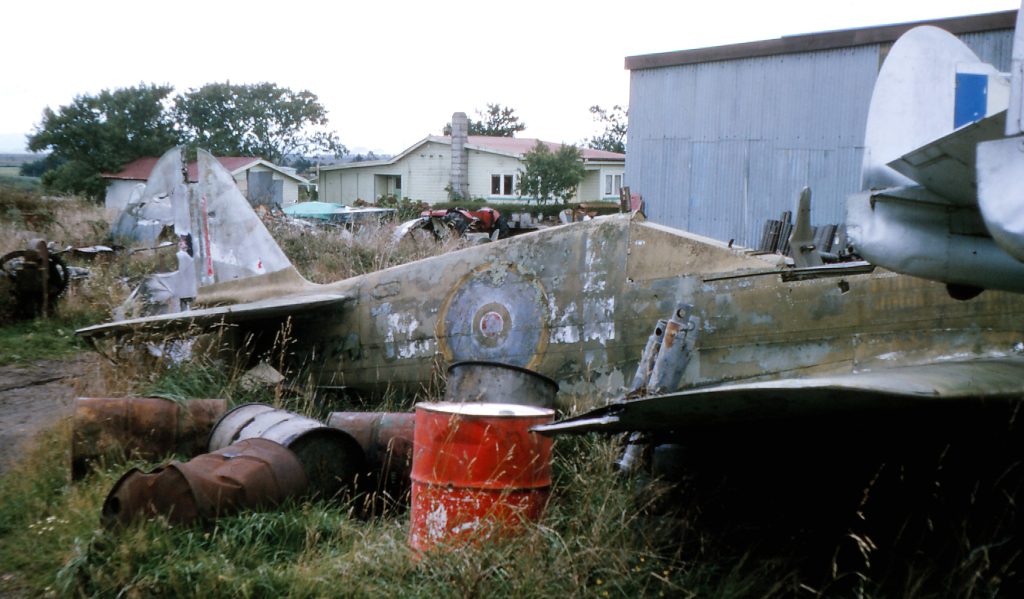
As with all other P-40s in New Zealand, the aircraft eventually ended up in the open-air storage yard at Rukuhia aircraft dump near Hamilton. Fortunately, it was selected by land owners Asplin’s as a display relic, being dumped along with a de Havilland Vampire beside the Asplins’ petrol station.
It was here in 1965 that Nelson collector John Smith discovered it, and noting that the aircraft was in relatively intact, with wings still attached but minus the engine and cowlings; he secured the P-40 and towed it the 472 miles (760 km) back to his property at Mapua, just west of Nelson. John was completely unaware of the aircraft’s history at this time.
Conservation and repair
Upon arrival at Mapua, Gloria spent the next 55 years or so with John, the fuselage for the most part under cover but the wings exposed to the elements.
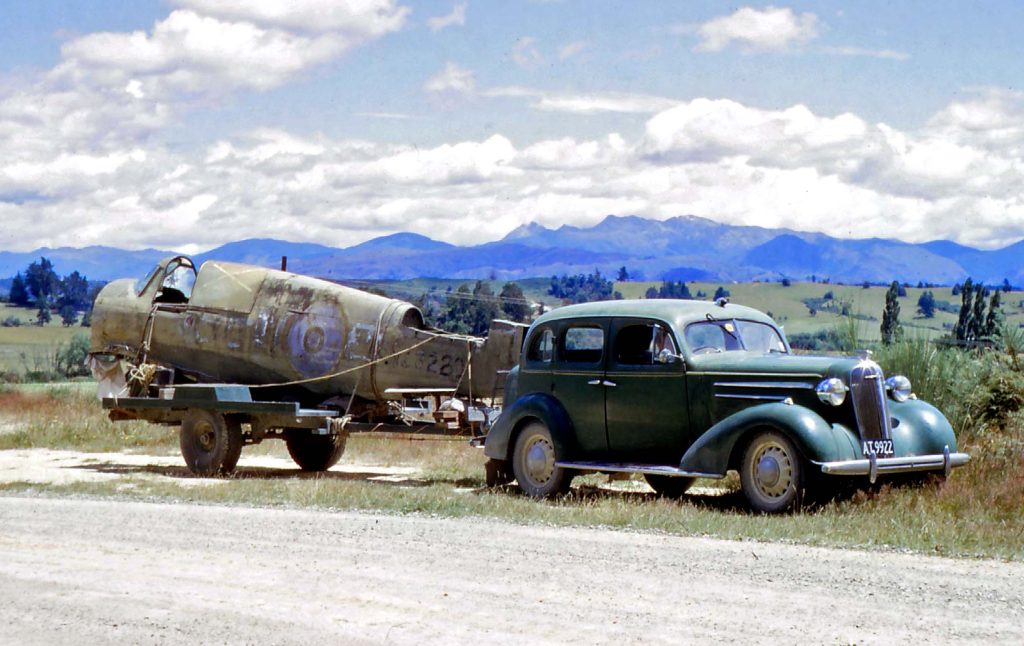
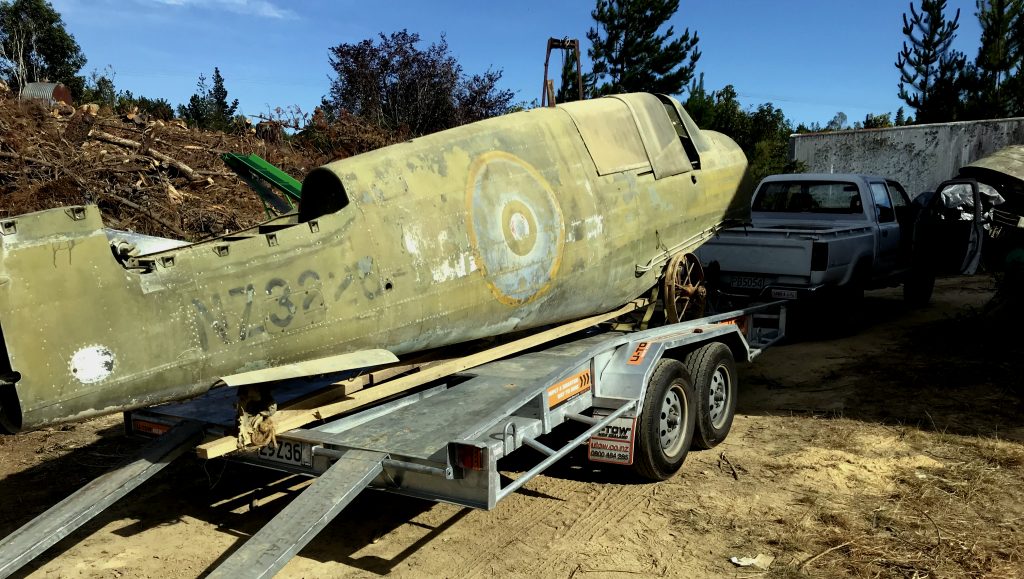
With the passing of John Smith in August 2019, an agreement was reached with his brother George that three aircraft would be moved and eventually incorporated into the displays at the Omaka Aviation Heritage Centre on a two-decade loan.
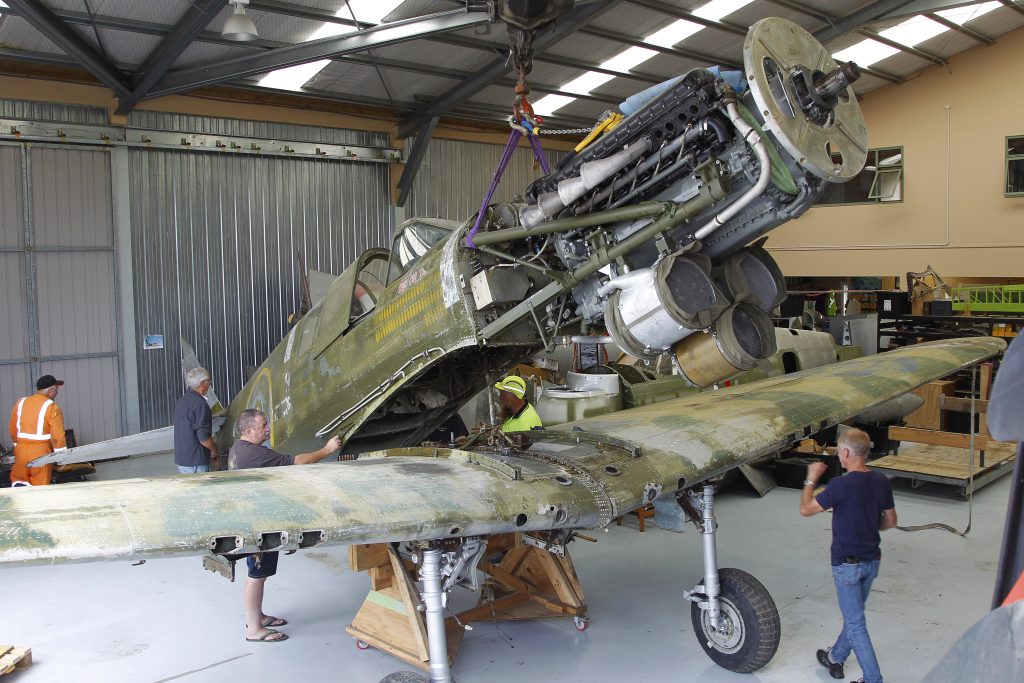
These aircraft were a Tiger Moth, a Mosquito FB.VI and P-40 Gloria Lyons. All needed some work in one form or another following their decades stored in John’s legendary shed. Gloria underwent around a year of conservation/restoration which has seen the fighter returned to a condition similar to that it would have been on operations, courtesy of Team Curtiss.
Fast forward to 20 January 2020, and the fuselage of NZ3220 was recovered from Mapua to Omaka, the wings following a month later.
Upon close inspection the status of the aircraft was found to be as follows: nothing forward of the firewall (engine, mounts, cowlings, propeller etc); no empennage installed; wings stored outside and suffering from corrosion; tailplane damaged at the tips; elevators and rudder badly damaged; main undercarriage only partially installed; cockpit mostly stripped (no instrument panel, seat, radio control, oxygen system, damaged switch panel and so on). There was also skin damage to the sides of fuselage below the cockpit.
The plan was to prepare the aircraft for public display while still retaining authenticity – especially the original paint. As such the approach was to conserve existing material without repair, repair if required, replace with original equipment manufacturer (OEM) items or manufacture replacement parts to Curtiss specifications. Fortunately, John Smith had pencilled the NZ serial number on many of the P-40 parts he had, so it was relatively straightforward to identify the original parts he had recovered for Gloria.
One of the first jobs following a good soapy washdown was to clean up the firewall which had extensive surface corrosion. Most P-40Ns (including 3220) had plated steel firewalls instead of the stainless steel firewalls used on earlier aircraft. This was done to save valuable war material but led to corrosion issues. Treatment required extensive sanding, followed by a coat of rust converter and then painting with silver and finally applying a liberal coat of Dinitrol, an anti-corrosion coating.
The fuselage in general was in very good condition, some scrapyard rash aside, the most visible being the two holes either side just below the canopy where cables had been threaded through to lift the aircraft during its time at Rukuhia. These were later patched and painted to match the rest of the fuselage.
The interior was cleaned, and during this process a number of loose smaller items were found. Once the fuselage fuel tank cover was persuaded to come off, it was found to contain a large amount of nesting material because the filler cap had been left off during its years in open storage. The oil tank had suffered some corrosion due to bird guano, bird nesting also being evident in the oil tank bay.
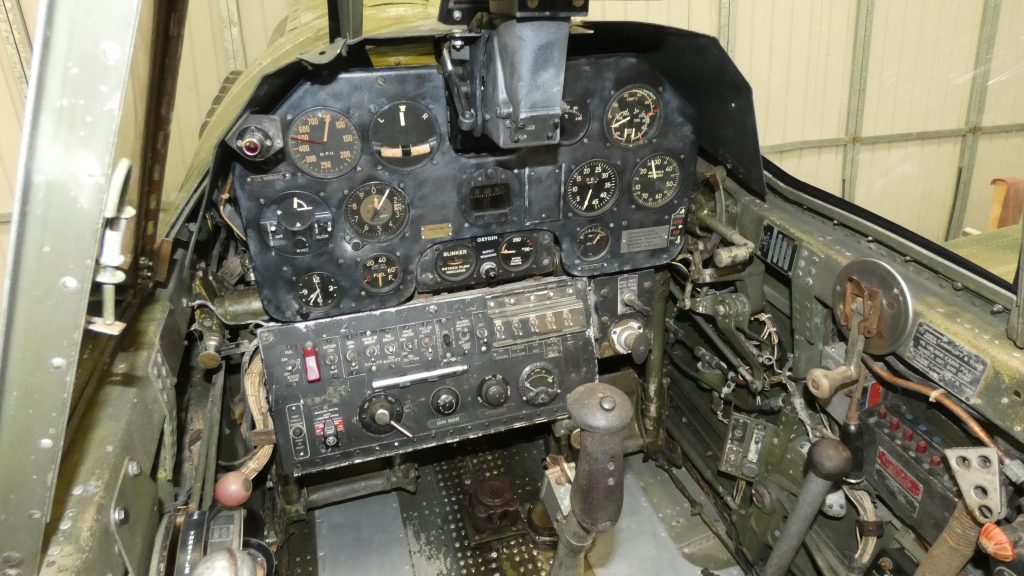
The cockpit received much attention as it had been basically stripped of what could be easily removed. One specific item still in situ was a surprise – the explosive radio charge, fortunately minus the charge itself! This unit is the SCR 695 IFF (identification friend or foe), sometimes called Identification Radio. It was secret and had a destruction charge installed (about the size of a 12-gauge shotgun cartridge) that could be set manually by the pilot simultaneously pressing two buttons or the automatic ‘G’ sense switch in the rear fuselage.
Radio controls and associated equipment was installed, the radios themselves located in the rear fuselage. A new manufacture instrument panel was sourced which allowed the fitting of all original instruments. A gun sight and replacement switch panel were installed, along with placards and a cockpit penlight torch. E-bay contributed an original WWII first aid kit (with contents) and numerous other accessories were tracked down and installed.
A wooden, non-adjustable seat of the same type as used in the P-40N was located and installed. The pilot’s seat armoured back plate, which is 5.16in (7.9mm) and double thickness around the head area, required a repair to one of the lugs which attach it to the wing centre section.
The oxygen regulator, D2 bottles and associated gauges were installed; the bottles are mounted above the fuselage fuel tank immediately behind the cockpit. Although suffering some rodent damage, the original wiring was still in place, as was the plumbing, and this was cleaned, clipped and tied into place.
The canopy was cleaned and refitted and the original Perspex cleaned with a micromesh polishing system. The rear canopy section was extensively rebuilt with new extrusions and replacement Perspex. The windscreen frame is original, as is the armoured glass front windscreen, although it is actually a New Old Stock replacement, the original having suffered significant damage during its time in the scrapyard, no doubt to see how much damage it could sustain prior to shattering (it didn’t).
Firewall forward
The Allison V-1710-99 engine was sourced from the Smith collection but was incomplete, missing all the accessories. The gearbox was missing and the supercharger housing partly removed. Inspection revealed some damage to this, which ties in with information that a seized engine had been given to John Smith following its use in a hydroplane racing boat. Fortunately, most of the missing parts were discovered among his large number of spares. The engine was tidied up externally, repainted and the missing parts installed.
John Smith had collected a couple of chin cowls, and these were in good condition apart from the cowl casting being cut out, possibly to make them useful as dog kennels. A replacement section was cast. A good condition top cowl was also available, but only a P-40E side cowl was held in the Smith collection and so replacement cowls were fabricated – a difficult process undertaken over several months.
P-40N cowls have a different shape for the exhaust and provision for an air filter at the front. The exhaust shrouds were sourced in Australia, with the asbestos drilled out of the shroud supports before fitting, and while the majority of the 12 exhausts originated from the Smith collection, those missing were sourced from within New Zealand.
A Curtiss electric propeller was installed, built up with parts. The blades are the Curtiss ‘paddle’ type used on the P-40N, earlier aircraft mostly using ‘toothpick’ blades. One of the blades had suffered from a forced landing and was badly curled. Initial straightening required heat treatment and a large press, firstly by Airbus at RNZAF Woodbourne and secondly at a Blenheim-based engineering firm. New spinner skins were fitted with original internal supports and backing plate, although it proved extremely challenging to get everything fitting together in an eye-pleasing manner.
The lower portion of the main undercarriage legs – chrome, axle, brake unit and wheels – were cut from the aircraft when it was in the scrapyard, but replacement parts were found in the John Smith collection, including original magnesium wheels, while the original tyres were fitted with new tubes. This was also the case with the tailwheel, the original fairings still in situ.
Paint a priority
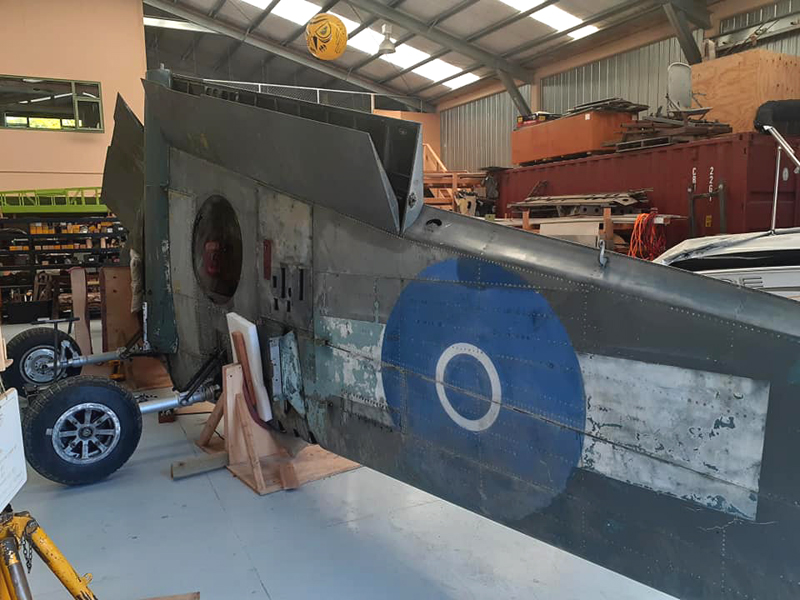
The most important part of the conservation was to preserve all original paint intact, and one of the major challenges was matching the weathered finish on replacement parts and repairs. Initial advice was sought from the Smithsonian Institute, and it was decided that two approaches would be considered – clearcoat or wax. Clearcoat cannot be removed without damaging the original paint and would eventually require sanding back and recoating, which could cause further damage.
It was therefore decided to go with the wax option, and several different types were trialled. Some were found to leave a white residue, as the paint surface is a matt finish. Beeswax was settled upon as it was easily applied, brought the paint back to life and doesn’t damage original paint.
Cowlings, flight controls and repairs on side of fuselage were paint matched with the rest of the aircraft. Underwing paint had largely remained intact, given 3220’s wings had been stored flat and the right way up, and the second of John Smit’ss P-40’s wings had been placed on top of them. They required a clean and a very limited touch-up where some flaking had occurred.
The top wing surface required more work, particularly as some sections required corrosion repairs. This involved some grinding and the fitting of a small number of replacement panels.
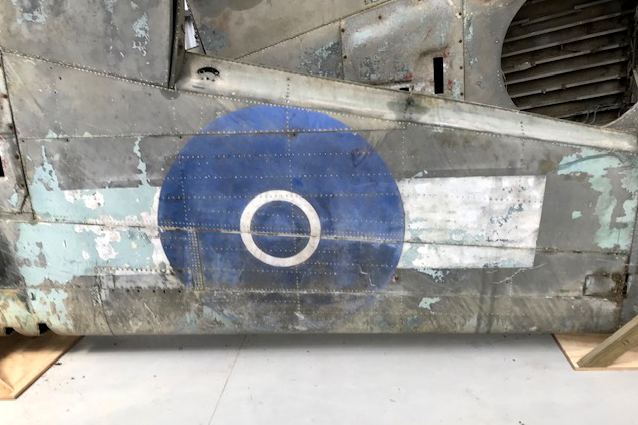
The wing paint had weathered back to its original Curtiss factory applied camouflage application, the RNZAF roundels completely gone except for the remains of a faint outline. The colours and weathering for the replacement panels were matched and top surface roundels lightly repainted.
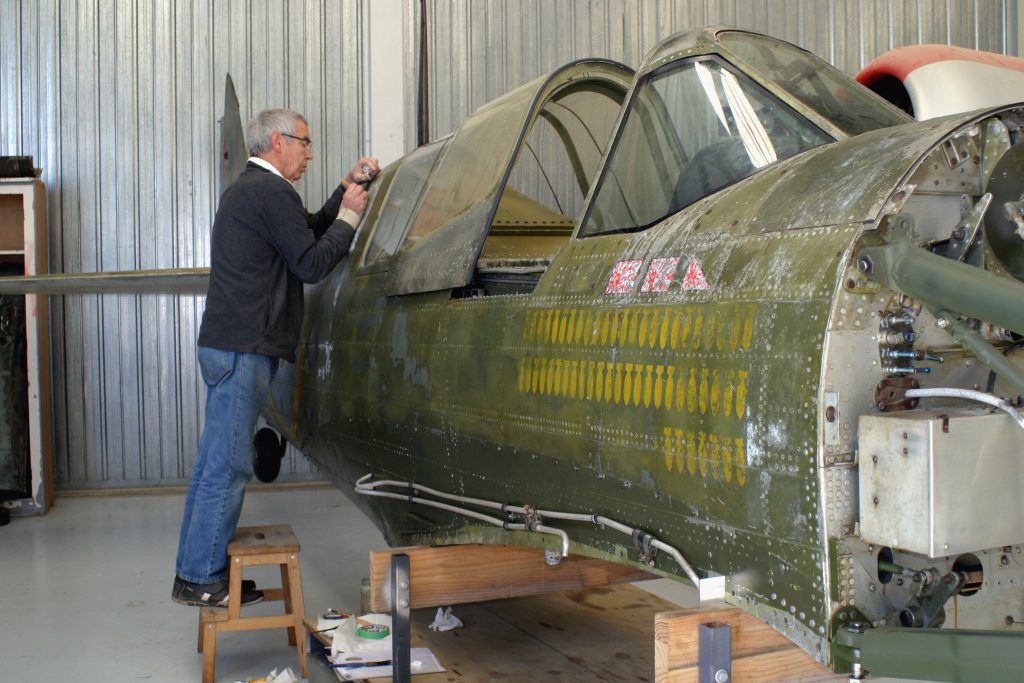
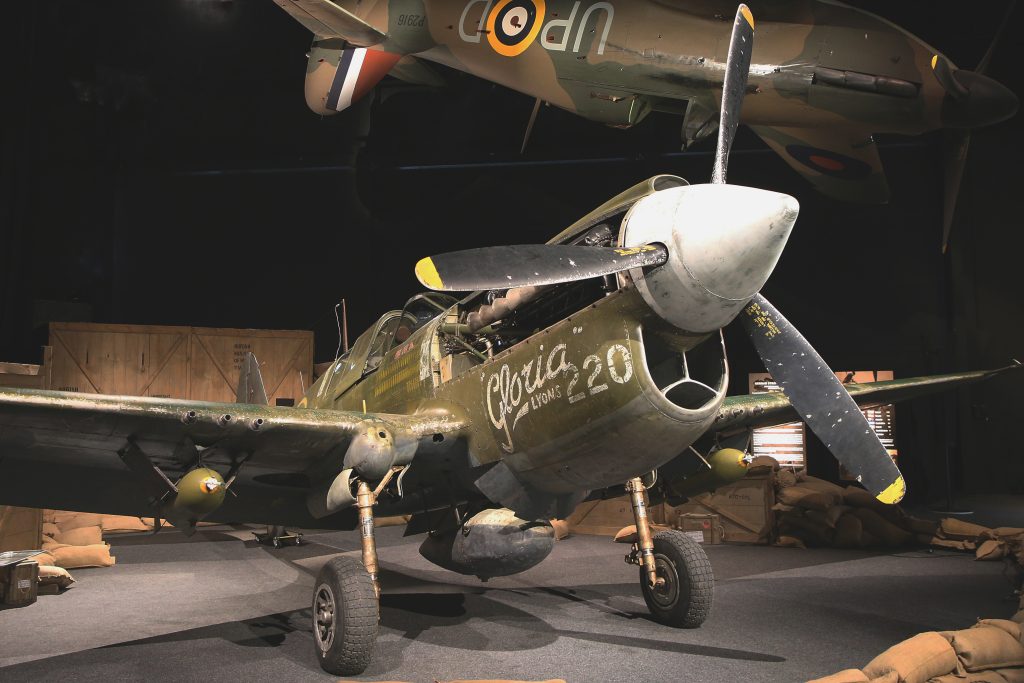
Of particular interest were the 2½ Japanese kill flags. These were quite faded, almost just an outline, so they were sympathetically touched up. But what was the history behind these? The bomb symbols remained in a good but faded condition.
Flying surfaces
The condition of the wings themselves externally was fair, considering they had spent their entire existence outdoors, and upon arrival much nesting material was removed and all accessible areas cleaned and coated with Dinitrol. As mentioned earlier, there were some patches of corrosion on the top surfaces, while internally spar cap corrosion was significant, treated with an anti corrosive throughout.
The elevators had suffered extensive damage and were rebuilt using parts of others. However, both top surfaces retained a light coat of faded white over the factory camouflage, while the under surfaces still had an extensive covering of white. The horizontal stabiliser still retained the remnants of a red diagonal strip, this specific to 4(F) OTU, although there is no record that Gloria ever spent any time with that unit. The vertical tail has the code PP 9-17-43 is clearly painted on and is thought to refer to the date of painting at the factory – 17 September 1943. Only minor repairs were required and these, as well as the elevators, were covered with Ceconite.
Some evidence of combat damage was discovered during work on the flying surfaces. A small calibre round (probably 7.9mm) had struck the under surface of the port flap/wing area had been quickly repaired. Also found was an in-service repair on the starboard flap which had been fabric covered. Given that no Japanese fighters were encountered during the period of NZ3220’s operational tour, this damage could only be the result of a lucky shot from the ground.
Armament
Gloria’s armament had been removed prior to the aircraft being Struck off Charge from the RNZAF, although all mechanisms and mounts remained intact. The wing gun bays have a complete set of mounts for 0.50 calibre machine guns. Dummy gun barrel extensions were installed in the wing leading edges.
Two under wing fibreglass replica 250lb bombs were installed. The plywood side braces were manufactured to Curtiss drawings and were originally designed to drop away with the bomb release. An imp62.45/US75 gallon (284 lt) drop tank was installed on the centre rack, complete with sway braces.
Gloria’s mystery markings
This P-40 had completed over 70 combat operations which included escorts, patrols, strafing and bombing. As per the squadron record book entry noted above, the 55 bomb markings were stated as being the cumulative efforts of the three Gloria marked fighters, and NZ3220’s last recorded was on 31 May 1944. But records show that the RNZAF P-40s “officially” began bombing sorties in March 1944, after the first two Glorias had been destroyed. So there is perhaps some mystery there, although this pales in comparison to that of origins of the Japanese victory flags
This ORB reference caused years of confusion, as it links the kills across the three Glorias. However, given that none of these three P-40s had shot down Japanese aircraft, the flags painted on NZ3220 were a head scratcher!
RNZAF historian Chris Rudge decided to try to solve the mystery. It was likely, being a common practice across all air forces, that the kills were claimed by a pilot who had them transferred to NZ3220 when it became a regular mount. The problem with that theory was that no RNZAF pilot claimed that number of Japanese aircraft destroyed and had them confirmed.
He decided to make a list of all the pilots who had flown NZ3220. Of these 44 pilots, 10 had made claims. The half claim was helpful, but working through the list only narrowed it down to just over two dozen combinations – one of the combinations had to have something in common, but what?
Chris Rudge takes up the story. “That was the moment I had a brainwave. What if I divided the pilots with confirmed claims into their individual squadrons – 17, 18 and 19?”
Squadron Confirmed claims
17 (F) Squadron 1 A6M ZERO & 3 x ½ shares confirmed
18 (F) Squadron 2 A6M confirmed
19 (F) Squadron 2 A6M confirmed
“There was the answer – one A6M and three half shares equals two and a half! These claims were made by Plt Off Donald Williams, with one confirmed, and three shared between Plt Off Thomas Rabone, Flt Sgt John Edwards and Sqn Ldr Douglas St. George. Thus the Japanese flags painted on NZ3220 represent the confirmed claims made by 17(F) Squadron pilots of the last squadron to operate NZ3220.”
Job done!
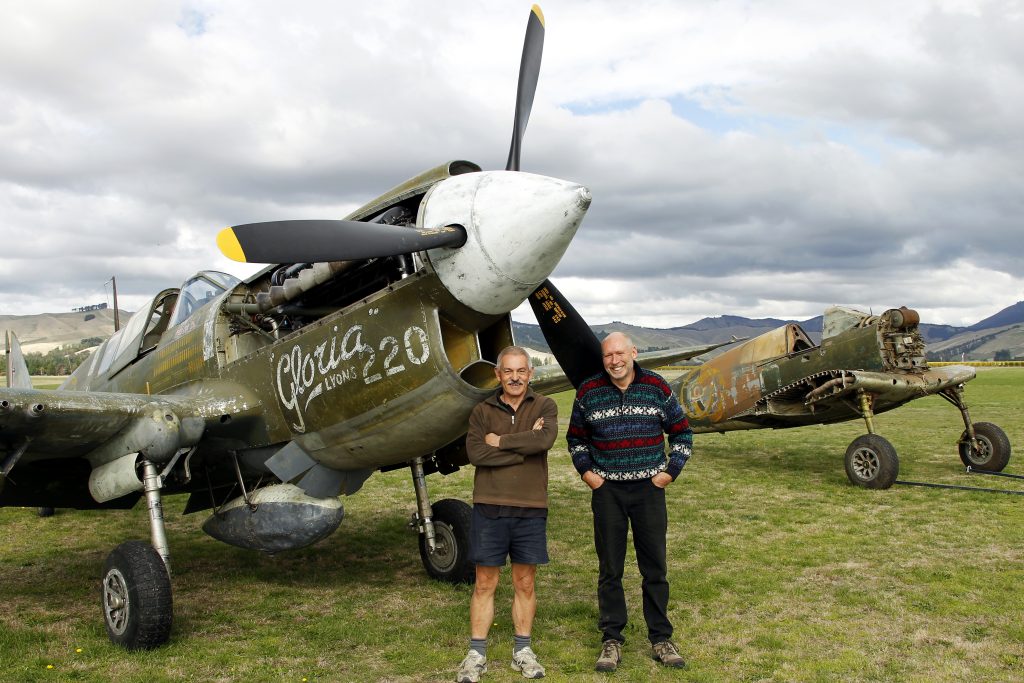
On Easter Sunday 2021, following some 3200 manhours expended over 13 months, a rollout celebration of sorts was held with special guests the Smith family and the numerous people involved with the project.
On 13 May 2021 NZ3220 was manoeuvred into position inside the Aviation Heritage Centre’s ‘Dangerous Skies’ exhibition – weathered and tired but keen to tell her story for generations to come.
This blog was first published in The Aero Historian – the Journal of the Aviation Historical Society of New Zealand Inc. Thanks to John King and Team Curtiss who put it together.
Return to part one – The life and times of Gloria Lyon – The Pacific campaign